
7 Lat Pulldown Alternatives
The wide-grip lat pulldown trains your lats and upper back as you pull a bar from overhead down to your upper chest. You need a substitute when the pulldown station is busy, when you train at home, or when you want to move on to pull-ups.
-
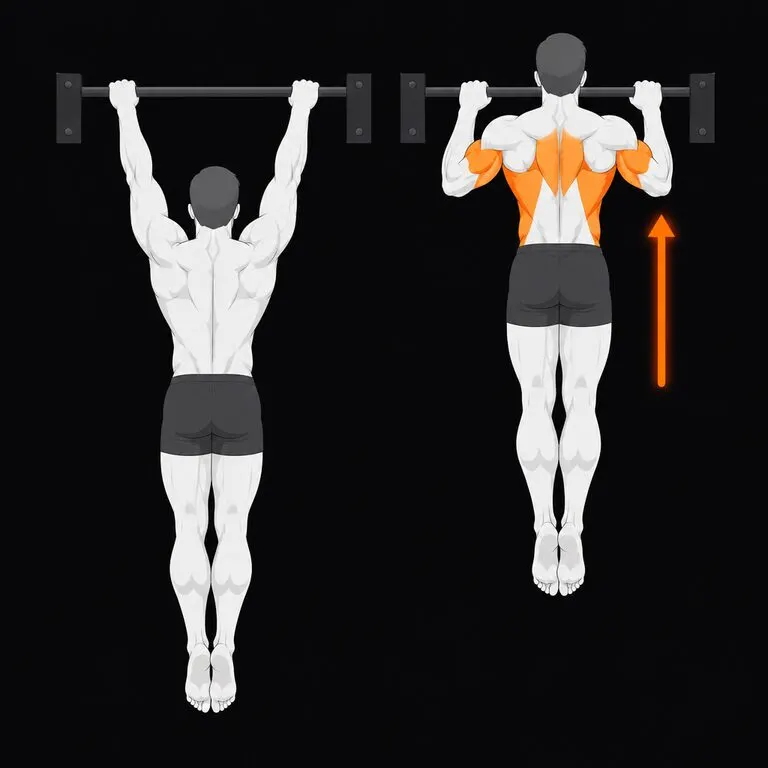
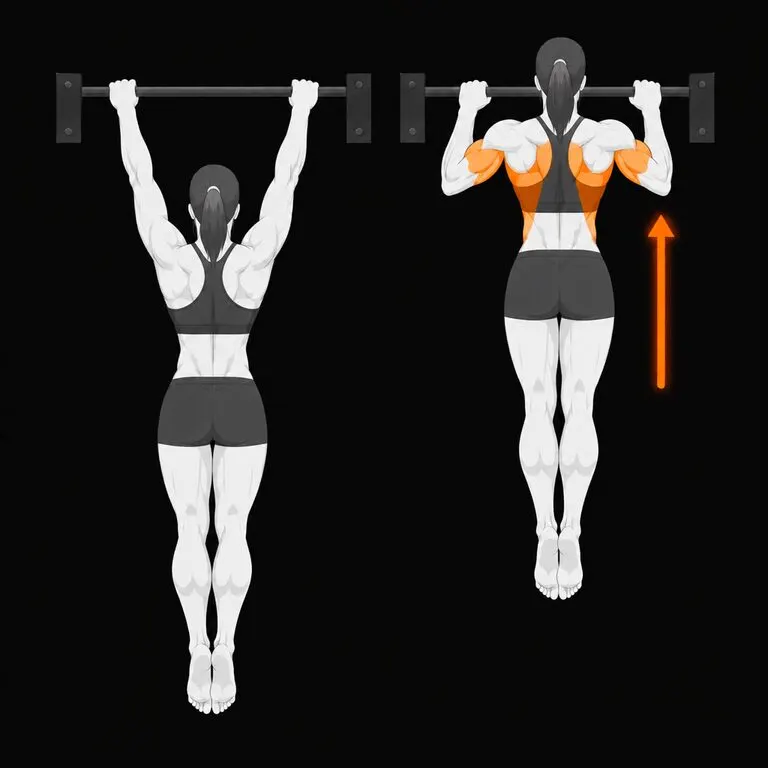
1. Pull-up
- Same main muscle
- Same movement pattern
- Pull-up bar
The pull-up is the same vertical pull, but you move your body up to the bar instead of pulling the bar down. You lift your full body weight, so it is harder than most pulldown loads and needs only a bar.
To build muscle: 3 x 3-8 reps (from the app's rules).
-
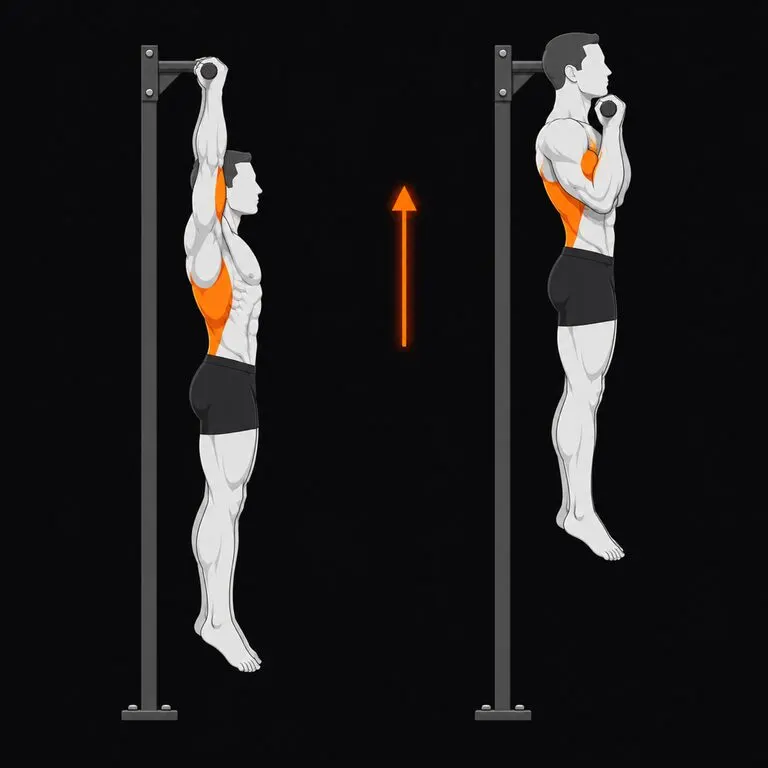
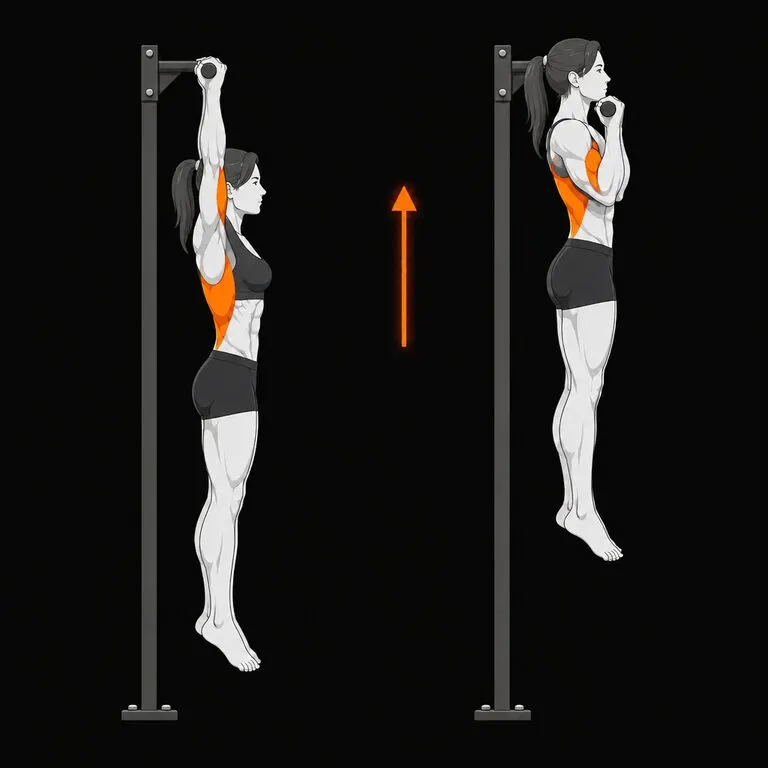
2. Chin-up
- Same main muscle
- Same movement pattern
- Pull-up bar
The chin-up is a vertical pull with your palms facing you and your hands about shoulder-width apart. In an EMG study the biceps worked harder in the chin-up than in the pull-up, and many people can do more chin-ups.
To build muscle: 3 x 3-8 reps (from the app's rules).
-
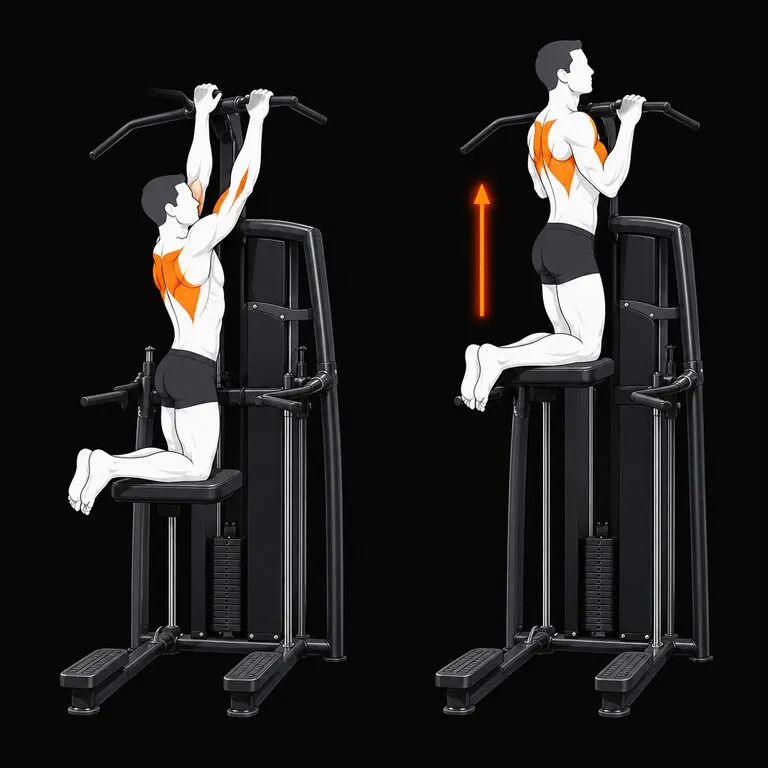
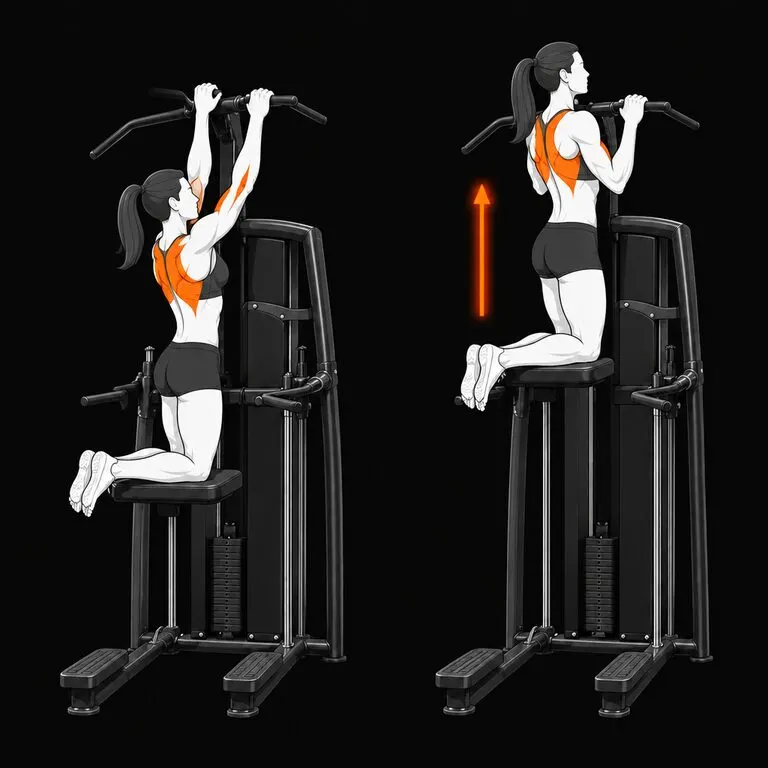
3. Assisted pull-up
- Same main muscle
- Same movement pattern
- Assisted pull-up machine
The assisted machine lets you do a real pull-up with a counterweight that takes part of your body weight. Like the pulldown, you can set the load, and it teaches the body position of a full pull-up.
To build muscle: 3 x 3-8 reps (from the app's rules).
How to do it
- Kneel or stand on the pad and grip the handles.
- Pull your shoulders down first.
- Pull until your chin is over the handles.
- Lower slowly to straight arms.
-
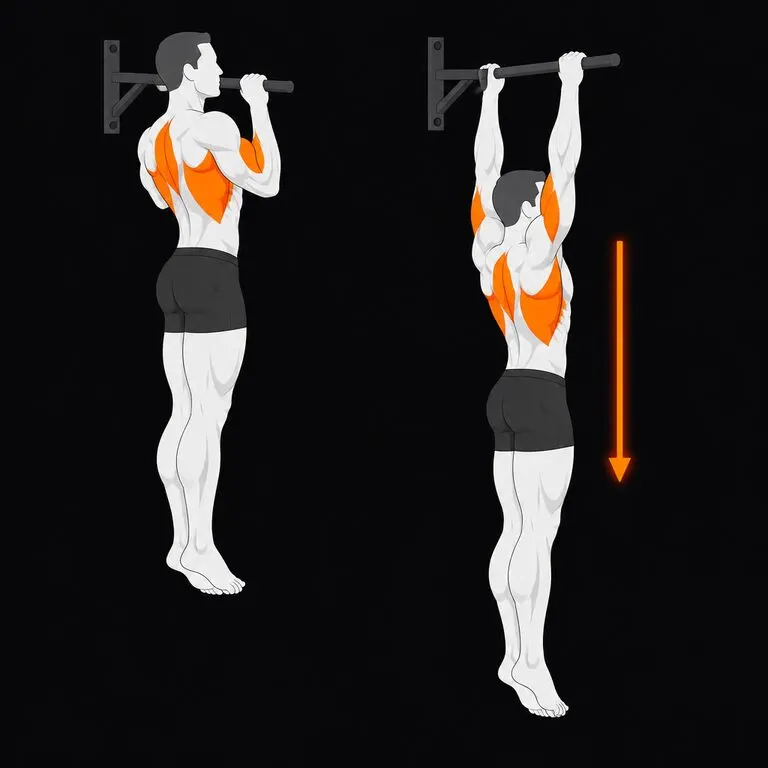
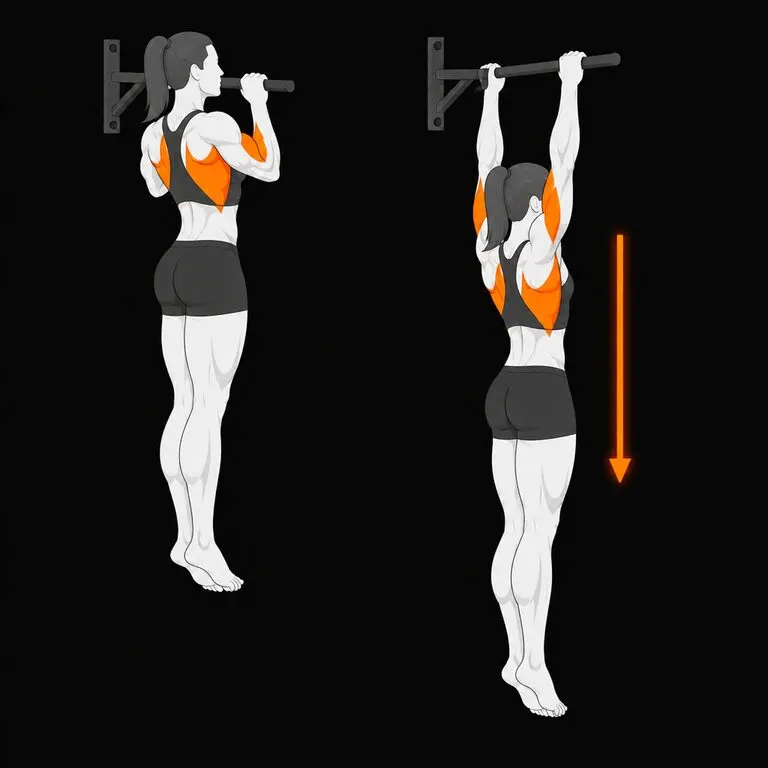
4. Negative pull-up
- Same main muscle
- Same movement pattern
- Pull-up bar
You jump or step up to the top of a pull-up and lower yourself as slowly as you can. It trains the lowering half only, so it builds toward full pull-ups when you have a bar but no machine.
To build muscle: 3 x 3-8 reps (from the app's rules).
How to do it
- Jump or step up so your chin is over the bar.
- Lower yourself as slowly as you can, about 3 to 5 seconds.
- Keep your shoulders pulled down.
- Reset at the bottom and repeat.
-
5. Band lat pulldown
- Same main muscle
- Same movement pattern
- Resistance bands
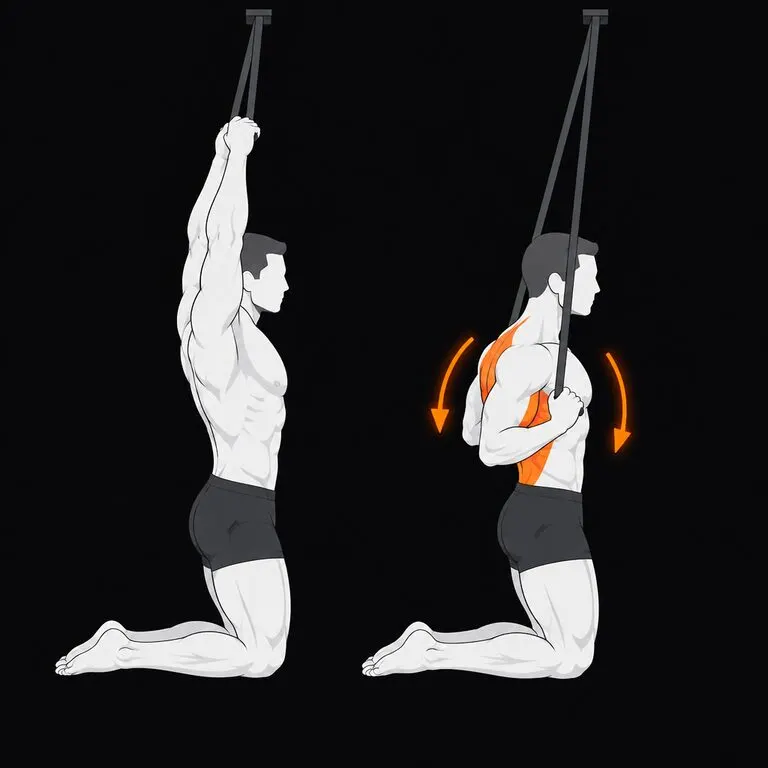
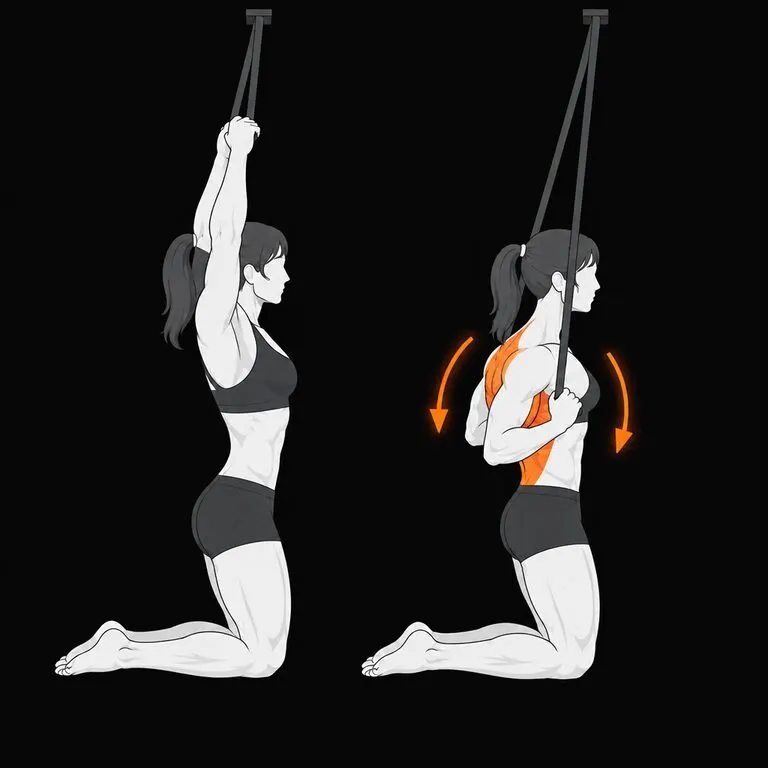
A band anchored high on a door or a bar copies the pulldown line of pull at home. The band gets harder as it stretches, so the bottom of the rep feels heavy and the top feels light.
To build muscle: 3 x 8-12 reps (from the app's rules).
How to do it
- Anchor the band high on a door or bar.
- Kneel and hold the band with straight arms overhead.
- Pull your elbows down toward your ribs.
- Let your arms rise slowly back up.
-
6. Prone lat pulldown
- Same main muscle
- Same movement pattern
- No equipment
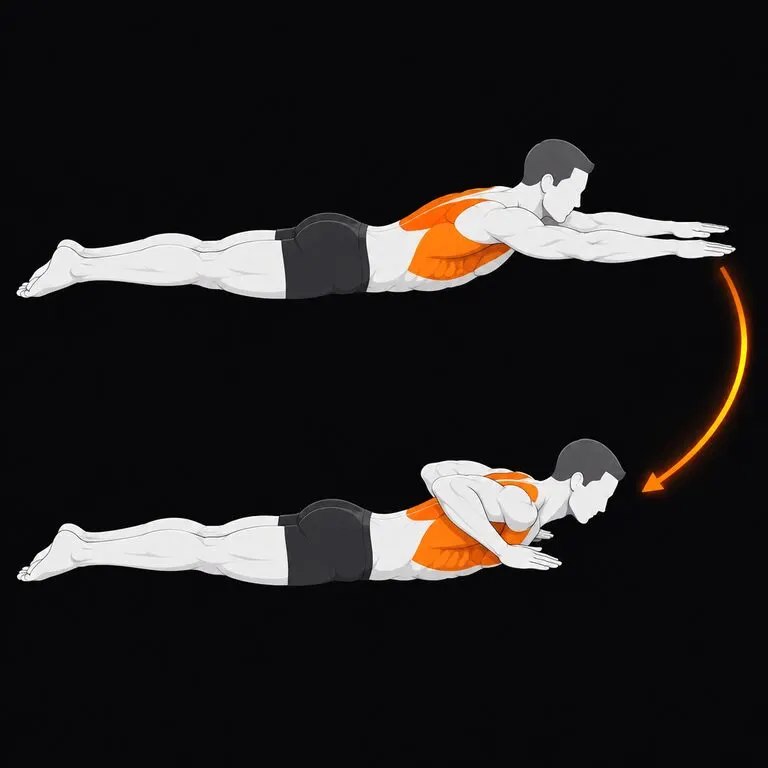
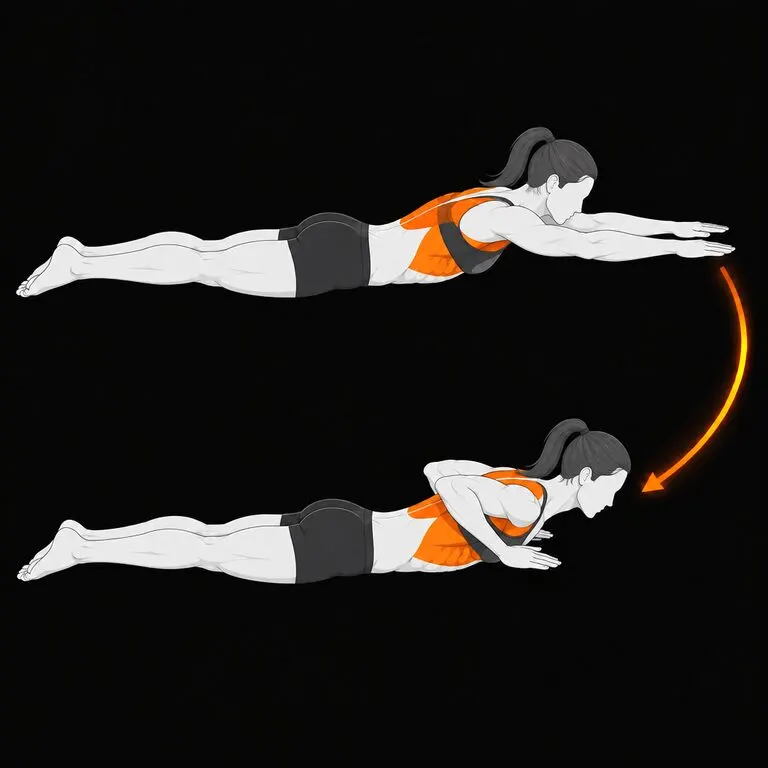
You lie face down and pull your elbows toward your ribs with your arms and chest lifted off the floor. It needs no equipment and trains the same squeeze, but there is no external load, so it is a light option.
To build muscle: 3 x 8-20 reps (from the app's rules).
How to do it
- Lie face down with your arms straight overhead.
- Lift your arms and chest a little off the floor.
- Pull your elbows down toward your ribs and squeeze your back.
- Reach back overhead slowly and repeat.
-
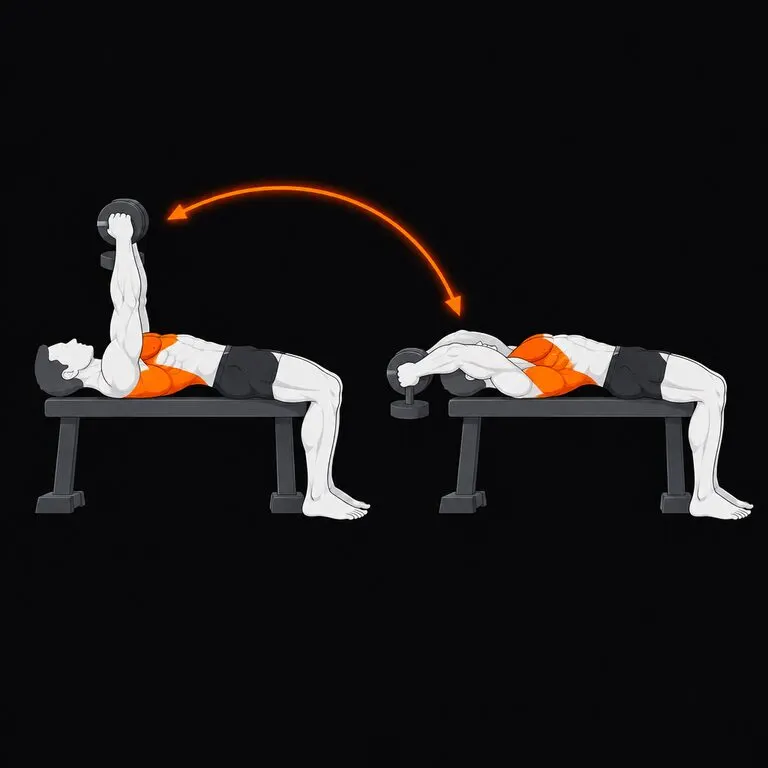
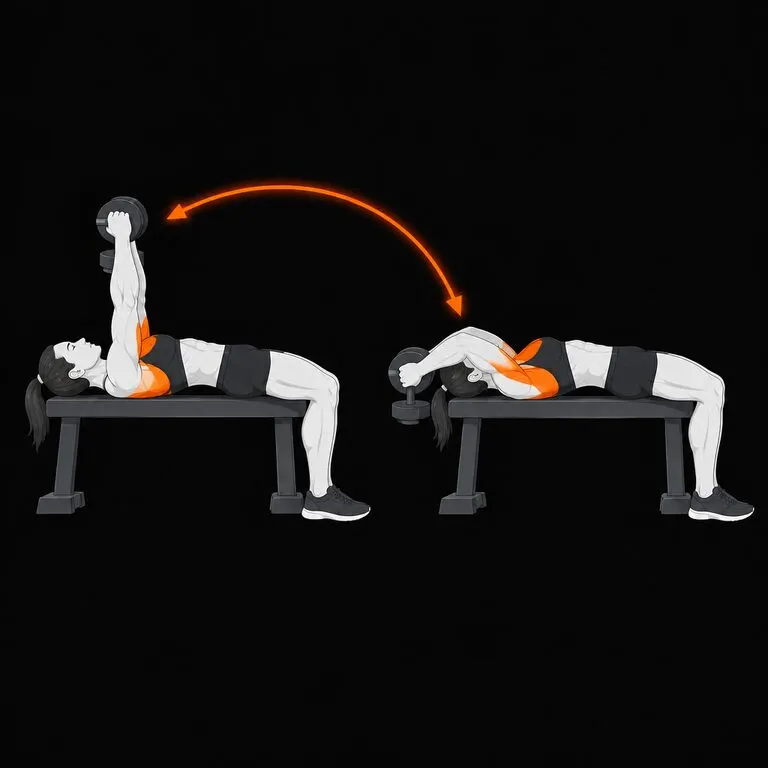
7. Dumbbell pullover
- Same main muscle
- Same movement pattern
- Dumbbells + Flat bench
The pullover trains the lats as they move your straight arm from behind your head back over your chest. The elbows stay almost straight, so the biceps do little work, and the chest helps more than in a pulldown.
To build muscle: 3 x 10-15 reps (from the app's rules).
How to do it
- Lie across or along the bench with one dumbbell held over your chest.
- Keep a slight bend in your elbows.
- Lower the dumbbell back behind your head until you feel a stretch.
- Pull it back over your chest with your lats.


Comparison table
| Exercise | Main muscles | Equipment | Level | Same pattern |
|---|---|---|---|---|
| Lat Pulldown (Wide Grip) (this exercise) | lats, upper back and biceps | Lat pulldown | Beginner | - |
| Pull-up | lats, upper back and biceps | Pull-up bar | Intermediate | Yes |
| Chin-up | lats and biceps | Pull-up bar | Intermediate | Yes |
| Assisted pull-up | lats, upper back and biceps | Assisted pull-up machine | Beginner | Yes |
| Negative pull-up | lats, biceps and upper back | Pull-up bar | Beginner | Yes |
| Band lat pulldown | lats and upper back | Resistance bands | Beginner | Yes |
| Prone lat pulldown | lats and upper back | None | Beginner | Yes |
| Dumbbell pullover | lats and chest | Dumbbells, Flat bench | Beginner | Yes |
How we chose
Keep the vertical pull: your arms start overhead and your elbows drive down toward your ribs. A row pulls toward your belly, so it trains the back from a different angle. Pick an option where you can control the weight, because the pulldown lets you choose a load lighter than your body weight. At home, a band anchored high or a pull-up bar keeps the same line of pull. Grip width matters less than many people think, so choose the grip that feels best on your shoulders.
The ranking is the same rule as the swap list in the Oh My Coach app: exercises with the same first main muscle and the same movement pattern come first, then the rest of the pattern, ordered by how well each one works as a main exercise. An exercise never replaces itself. The extra picks for home, dumbbells and bands come from the same rule with only that equipment.
Questions
What is the best lat pulldown alternative at home?
If you can fit a pull-up bar in a doorway, use negative pull-ups and chin-ups. If not, anchor a resistance band high on a door and do band pulldowns. With no gear at all, the prone lat pulldown on the floor keeps the movement.
Can I replace lat pulldowns with pull-ups?
Yes. Both are vertical pulls for the lats. The difference is the load: a pull-up uses your full body weight, so start with assisted or negative reps if you cannot do one yet.
Does grip width matter on the lat pulldown?
Less than people think. In one study of pulldown grips, a palms-forward grip gave more lat activity than a palms-up grip, while grip width did not change it. Pick a width that is comfortable for your shoulders.