
9 Seated Cable Row Alternatives
The seated cable row trains your upper back, lats and biceps as you pull a handle to your belly and squeeze your shoulder blades together. You need a substitute when the cable station is busy, when your gym has no row machine, or when you train at home.
-
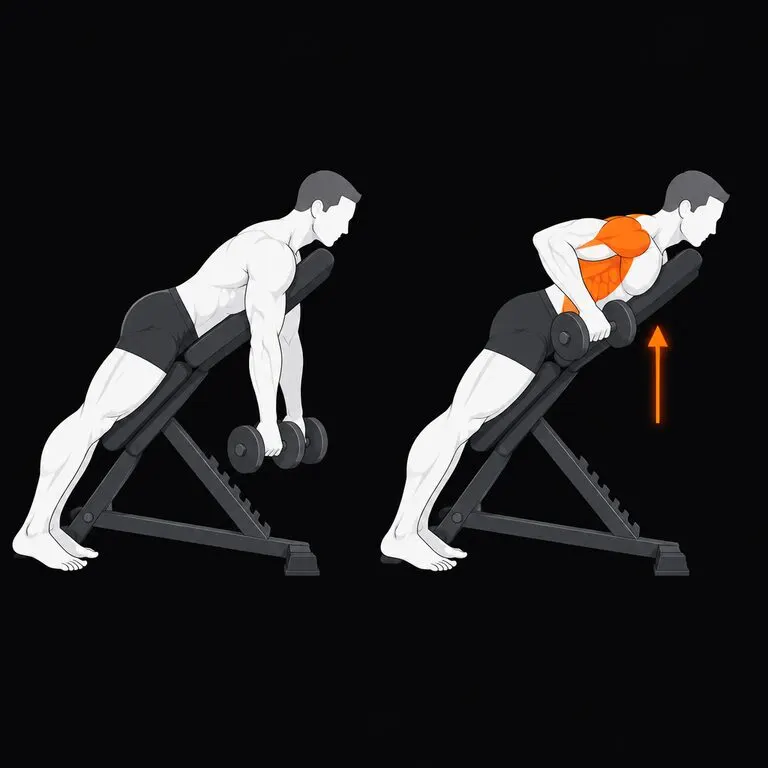
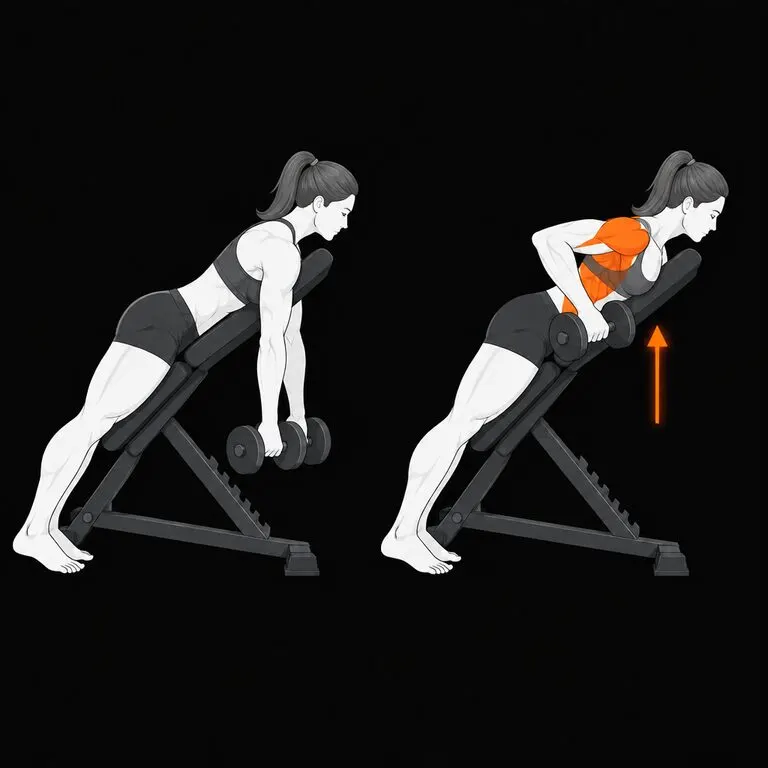
1. Chest-supported dumbbell row
- Same main muscle
- Same movement pattern
- Dumbbells + Flat bench
Your chest rests on an inclined bench, so your lower back does not have to hold your torso still. Each arm moves its own dumbbell, which lets you pull a little farther back than with a fixed handle.
To build muscle: 3 x 8-12 reps (from the app's rules).
How to do it
- Lie face down on an inclined bench with a dumbbell in each hand.
- Let your arms hang straight down.
- Row the dumbbells up and squeeze your shoulder blades together.
- Lower under control.
-
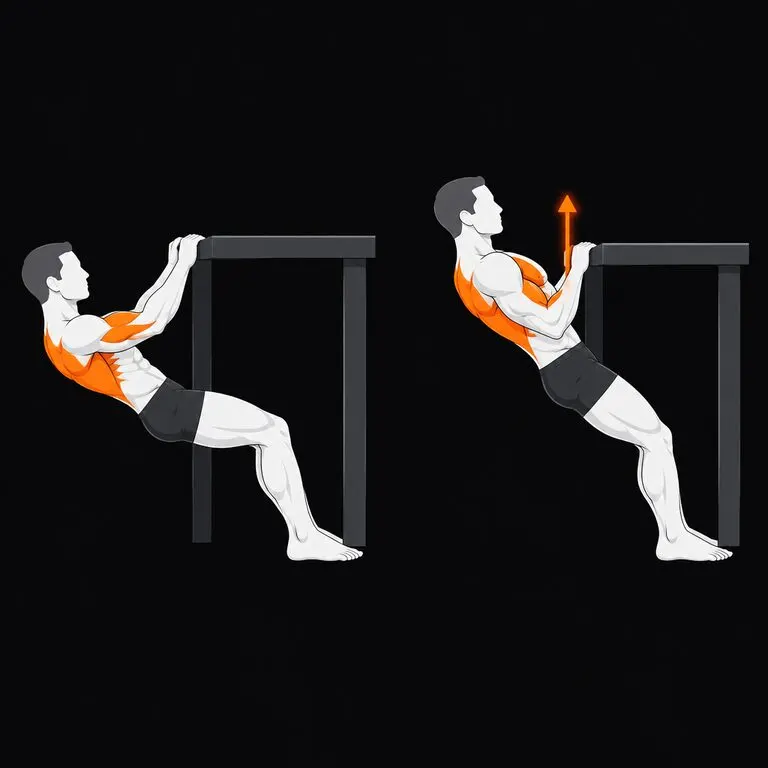
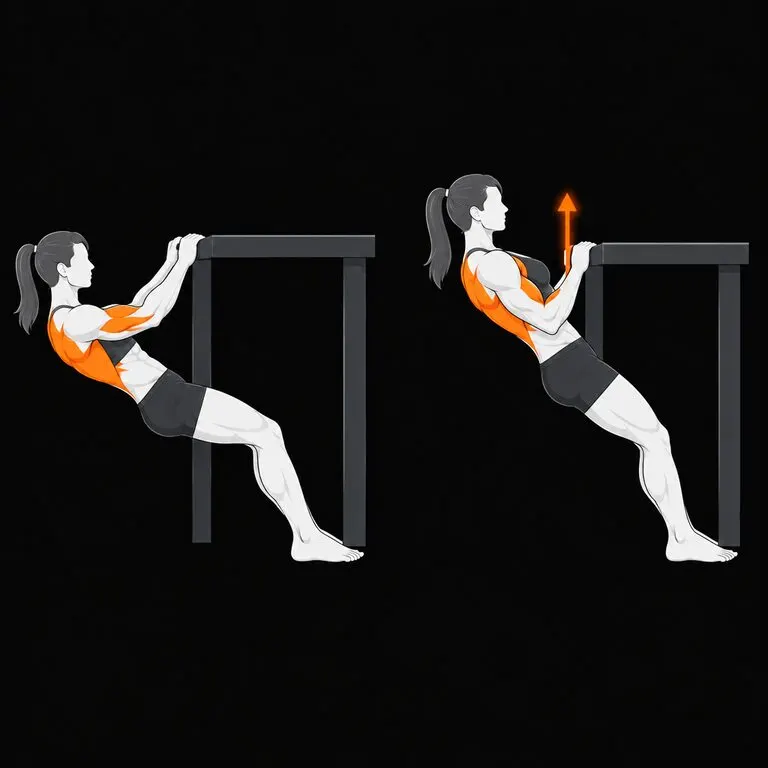
2. Table row
- Same main muscle
- Same movement pattern
- No equipment
You lie under a very sturdy table and pull your chest up to the edge. It is a bodyweight row, so you make it harder by straightening your legs instead of adding plates.
To build muscle: 3 x 8-20 reps (from the app's rules).
How to do it
- Lie under a very sturdy table and grip its edge.
- Bend your knees and keep your hips in line with your body.
- Pull your chest up to the table edge.
- Lower with control; straighten your legs to make it harder.
-
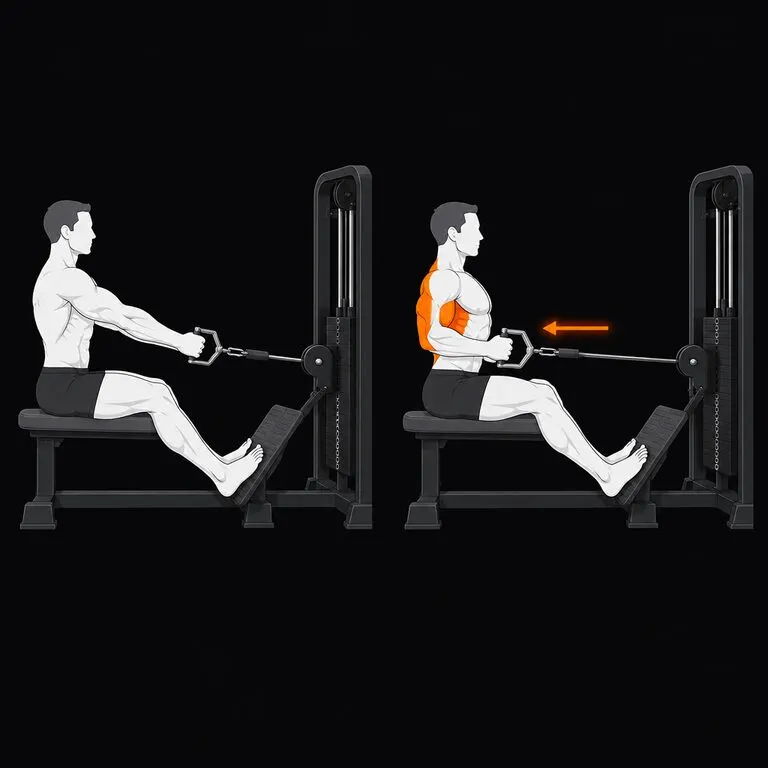
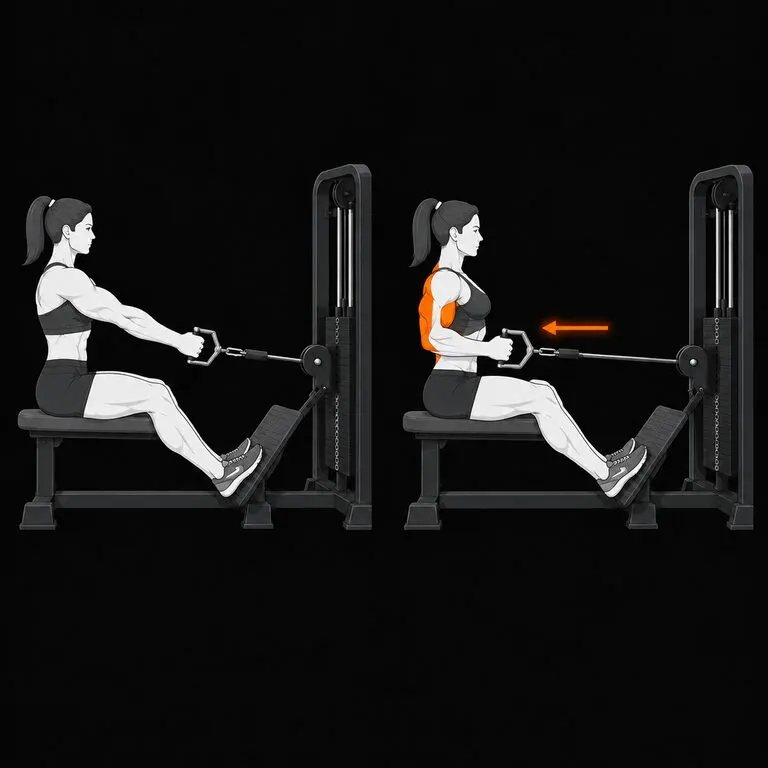
3. Cable low row
- Same main muscle
- Same movement pattern
- Cable machine
The low cable row is the same pull on a cable stack, usually with a V-handle and your knees slightly bent. If your gym has no dedicated row station, this is the nearest match.
To build muscle: 3 x 8-12 reps (from the app's rules).
How to do it
- Attach a V-handle to the low pulley and sit facing it with your knees slightly bent.
- Sit tall and hold the handle with straight arms.
- Pull the handle to your belly, driving your elbows back.
- Return slowly until your arms are straight, without rounding your back.
-
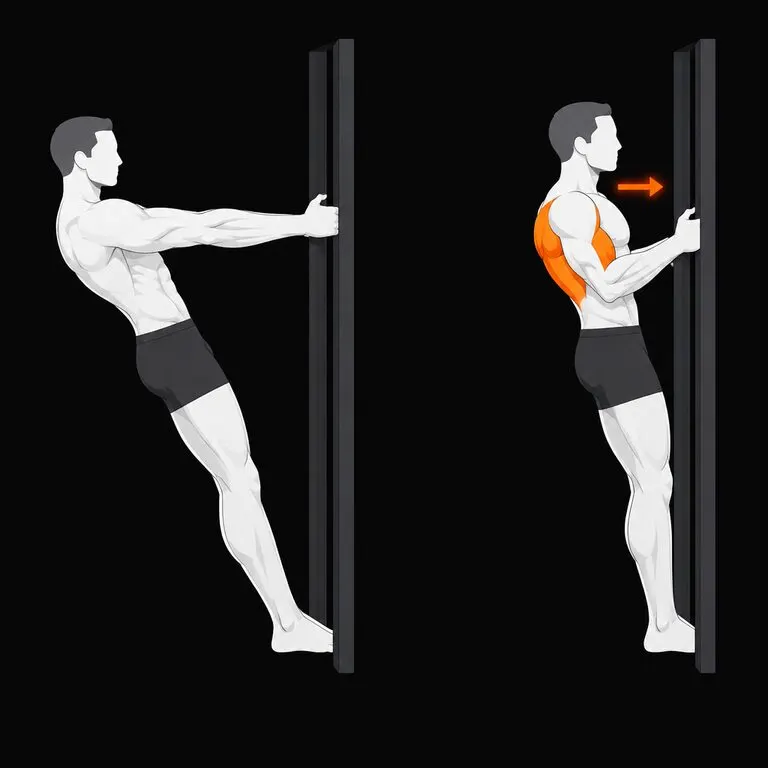
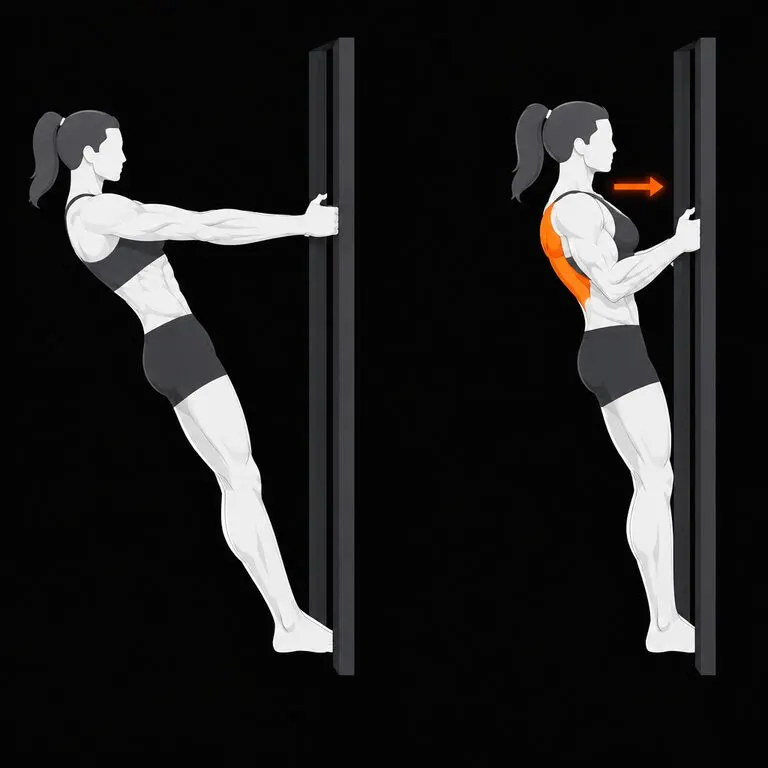
4. Doorframe row
- Same main muscle
- Same movement pattern
- No equipment
You hold both sides of a doorframe and lean back, then pull your chest toward the frame. It is the easiest home row, and you make it harder by moving your feet closer to the frame.
To build muscle: 3 x 8-12 reps (from the app's rules).
How to do it
- Hold both sides of a sturdy doorframe at chest height.
- Lean back with straight arms and your feet close to the frame.
- Pull your chest toward the frame by squeezing your shoulder blades.
- Lower slowly; walk your feet closer to make it harder.
-
5. Suspension trainer row
- Same main muscle
- Same movement pattern
- Suspension trainer
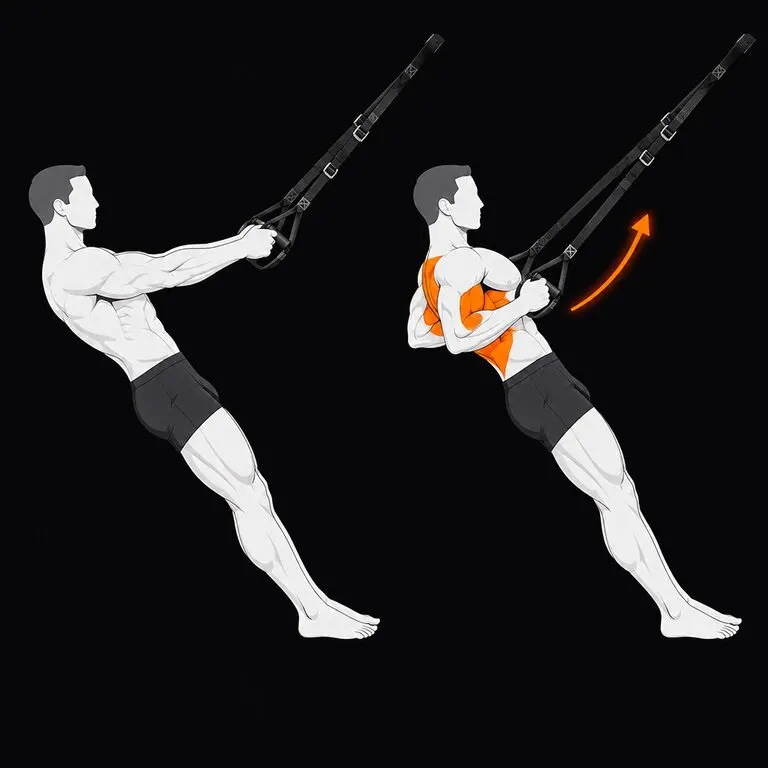
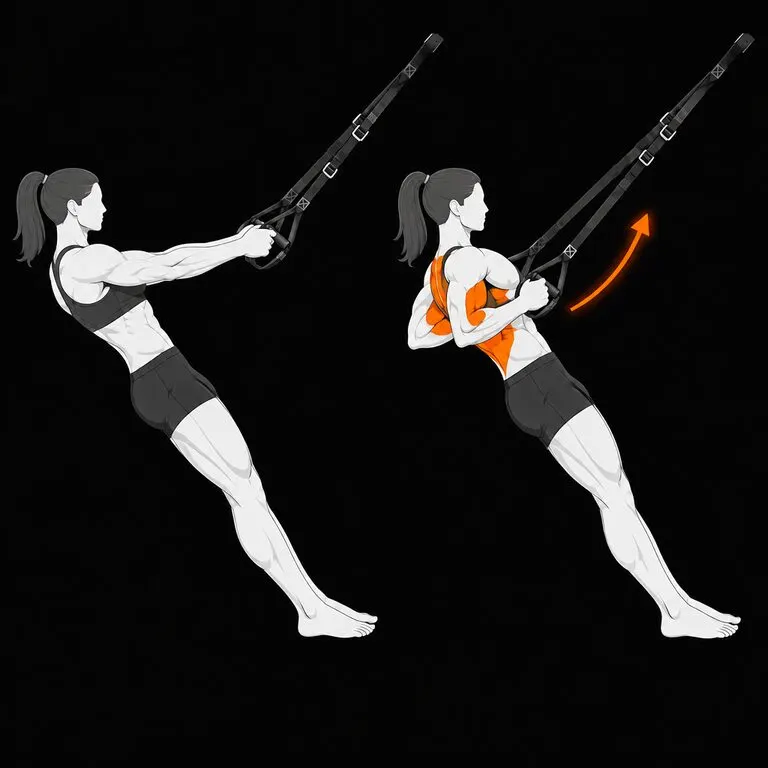
You lean back on suspension straps and pull your hands to your ribs. You change the load by walking your feet forward or back, and your core works to keep your body straight.
To build muscle: 3 x 8-20 reps (from the app's rules).
How to do it
- Hold the handles and lean back with straight arms.
- Keep your body in one straight line.
- Pull your hands to your ribs and squeeze your shoulder blades.
- Lower slowly; walk your feet forward to make it harder.
-
6. Band seated row
- Same main muscle
- Same movement pattern
- Resistance bands
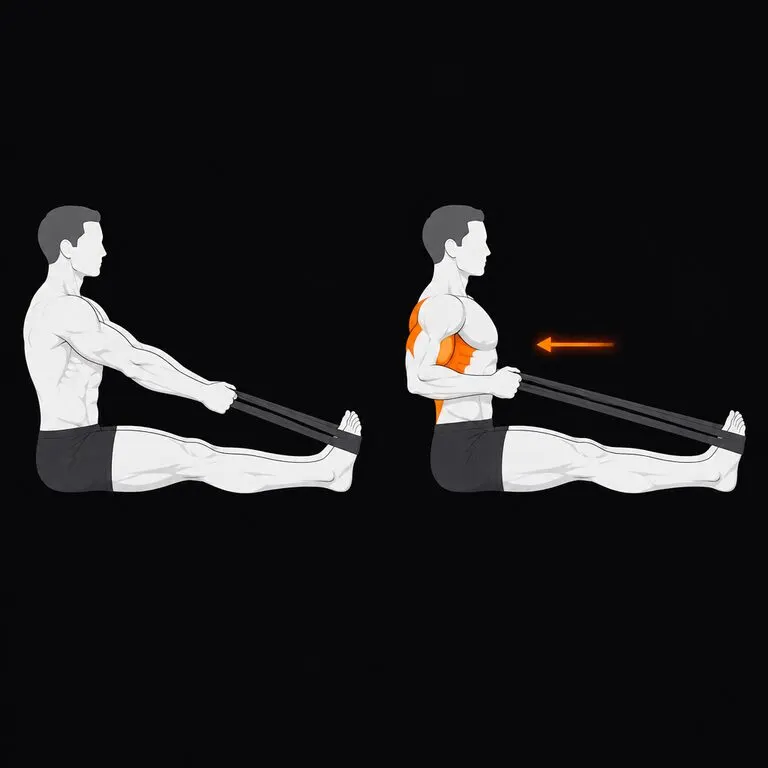
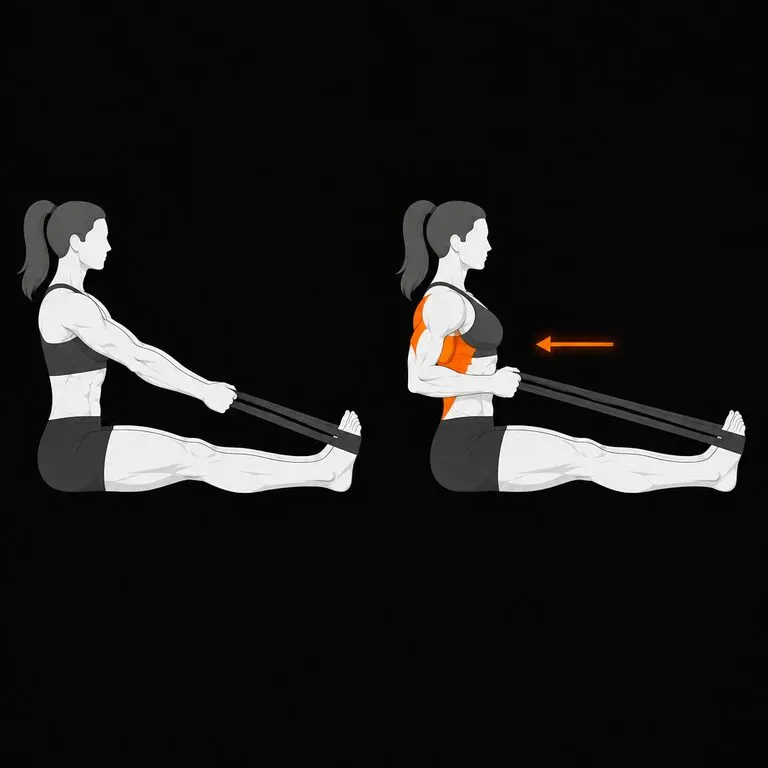
A band looped around your feet copies the seated cable row on the floor at home. Band tension rises as you pull, so the end of the rep feels hardest and the start feels light.
To build muscle: 3 x 8-12 reps (from the app's rules).
How to do it
- Sit with legs straight and loop the band around your feet.
- Sit tall and hold the band ends.
- Pull your hands to your ribs and squeeze your shoulder blades.
- Return slowly without slumping.
-
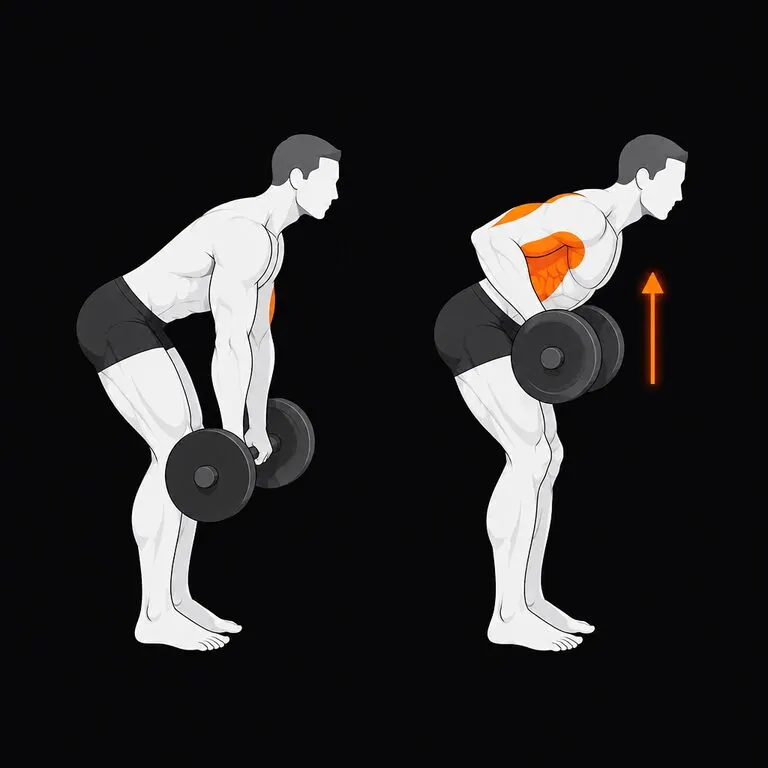
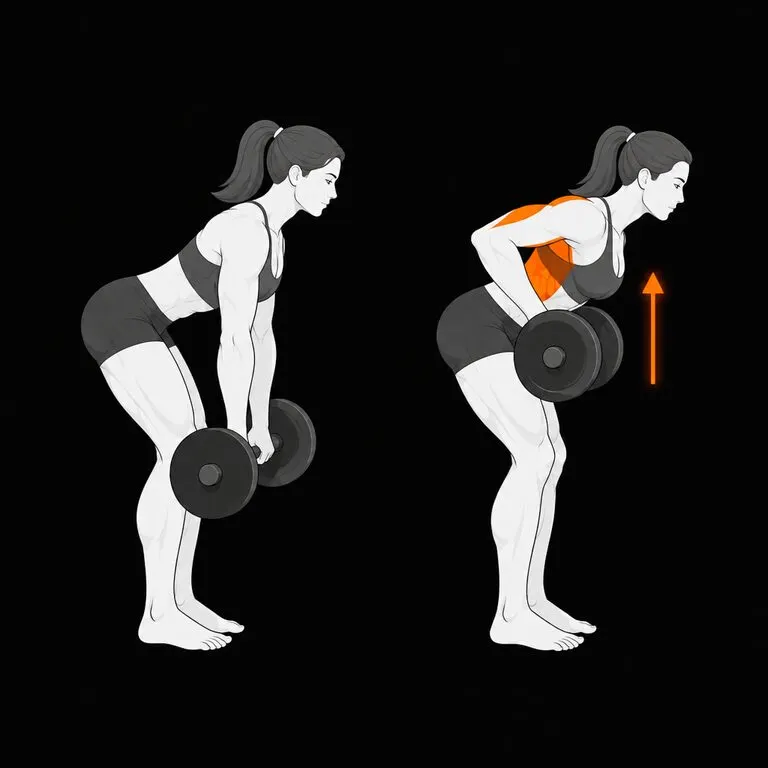
7. Barbell bent-over row
- Trains the upper back
- Same movement pattern
- Barbell + Weight plates
The bent-over row trains the same back muscles with a barbell and a hinged torso. Your lower back must hold the hinge for the whole set, so it is a harder, heavier option.
To build muscle: 3 x 8-10 reps (from the app's rules).
How to do it
- Hinge until your torso is close to 45 degrees with a flat back.
- Grip the bar just outside your knees.
- Pull the bar to your lower ribs.
- Lower with control and keep your torso still.
-
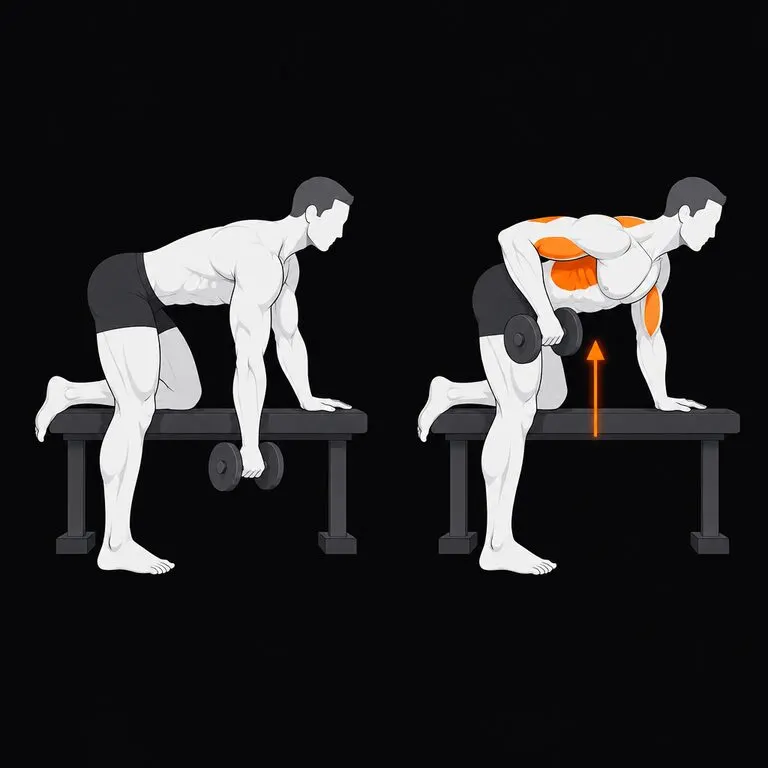
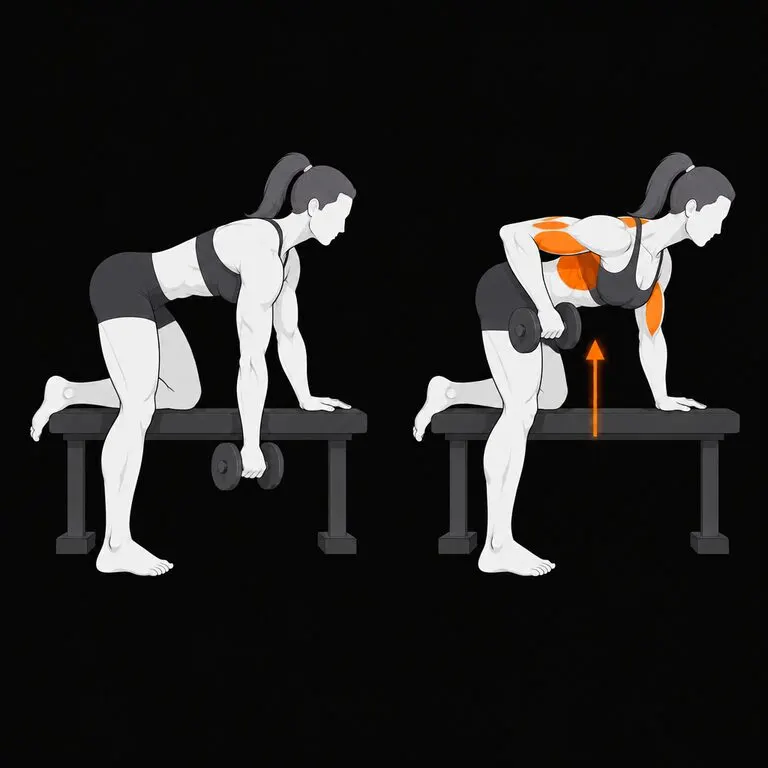
8. One-arm dumbbell row
- Trains the upper back
- Same movement pattern
- Dumbbells + Flat bench
One hand and one knee on a bench support your torso while the other arm rows. Working one side at a time lets you pull through a long range and find a weak side.
To build muscle: 3 x 8-12 reps (from the app's rules).
How to do it
- Put one knee and one hand on the bench.
- Keep your back flat and your neck long.
- Pull the dumbbell toward your hip.
- Lower until your arm is straight and your shoulder stretches.
-
9. Kettlebell row
- Trains the upper back
- Same movement pattern
- Kettlebell
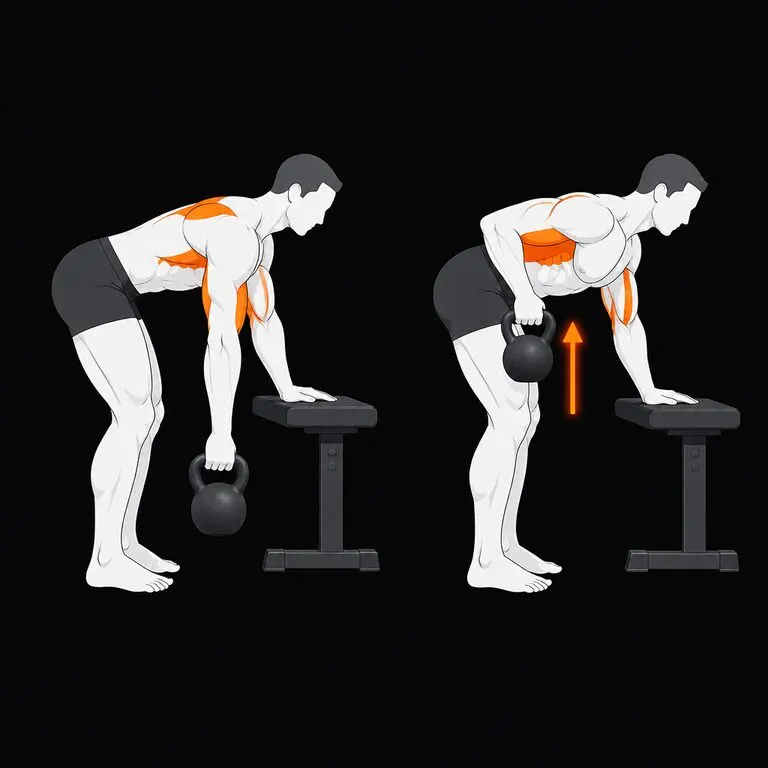
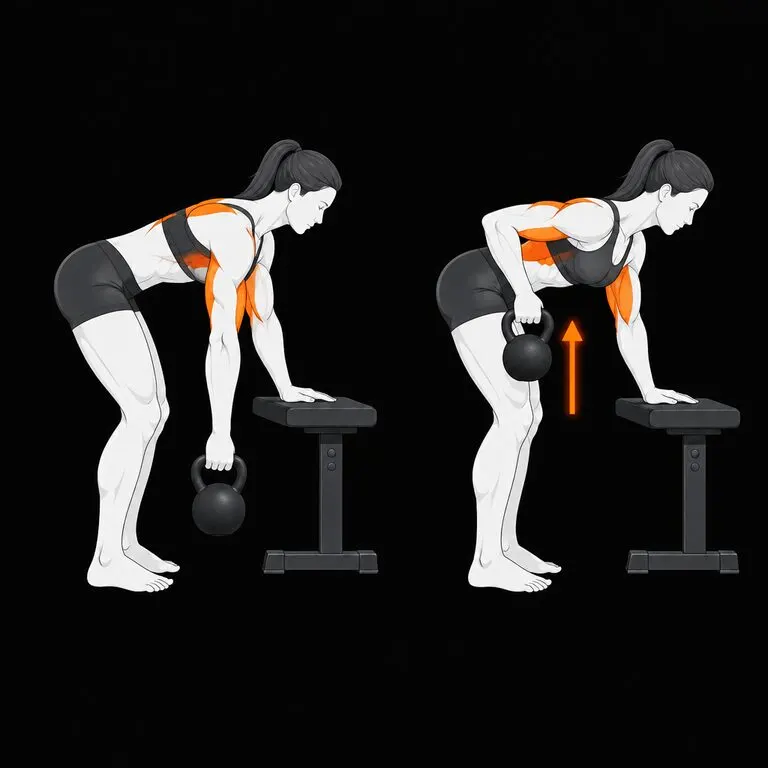
The kettlebell row is a one-arm row with your free hand on your knee or a bench. It suits home training with a single kettlebell, but the load is often lighter than at the cable stack.
To build muscle: 3 x 8-12 reps (from the app's rules).
How to do it
- Hold the kettlebell in one hand and put the other hand on your knee or a bench.
- Hinge forward with a flat back until your torso is almost parallel to the floor.
- Pull the kettlebell to your hip, keeping your elbow close to your body.
- Lower it slowly until your arm is straight. Change sides after the set.


Comparison table
| Exercise | Main muscles | Equipment | Level | Same pattern |
|---|---|---|---|---|
| Seated Cable Row (this exercise) | upper back, lats and biceps | Seated row | Beginner | - |
| Chest-supported dumbbell row | upper back, lats and rear delts | Dumbbells, Flat bench | Beginner | Yes |
| Table row | upper back, lats and biceps | None | Beginner | Yes |
| Cable low row | upper back, lats and biceps | Cable machine | Beginner | Yes |
| Doorframe row | upper back, lats and biceps | None | Beginner | Yes |
| Suspension trainer row | upper back, lats and biceps | Suspension trainer | Beginner | Yes |
| Band seated row | upper back, lats and biceps | Resistance bands | Beginner | Yes |
| Barbell bent-over row | lats, upper back and biceps | Barbell, Weight plates | Intermediate | Yes |
| One-arm dumbbell row | lats, upper back and biceps | Dumbbells, Flat bench | Beginner | Yes |
| Kettlebell row | lats, upper back and biceps | Kettlebell | Beginner | Yes |
How we chose
Keep the horizontal pull: the handle or weight moves toward your torso, and your shoulder blades pull back at the end of each rep. The cable row keeps your torso still with your feet braced, so swaps with chest support are the closest match. Free-standing rows, such as the bent-over row, add work for your lower back to hold the hinge. At home, rows under a table, in a doorframe or with a band keep the same pull with body weight or band tension.
The ranking is the same rule as the swap list in the Oh My Coach app: exercises with the same first main muscle and the same movement pattern come first, then the rest of the pattern, ordered by how well each one works as a main exercise. An exercise never replaces itself. The extra picks for home, dumbbells and bands come from the same rule with only that equipment.
Questions
What is the best seated cable row alternative at home?
With dumbbells, do one-arm rows or chest-supported rows on an incline bench. With no weights, a table row or doorframe row works the same muscles. A resistance band around your feet gives the closest seated feel.
Can I replace seated cable rows with dumbbell rows?
Yes. Both are horizontal pulls for the upper back and lats. The one-arm dumbbell row trains one side at a time, and the chest-supported version keeps your lower back out of the lift.
Can I do lat pulldowns instead of seated rows?
Not as a direct swap. A pulldown is a vertical pull from overhead, while the row pulls toward your belly. A balanced program usually includes both a vertical and a horizontal pull.