
10 Deadlift Alternatives
The barbell deadlift trains your hamstrings, glutes and lower back as you lift a loaded bar from the floor to a standing lockout. You need a substitute when you have no barbell or plates, when your lower back needs a break, or when you train at home.
-
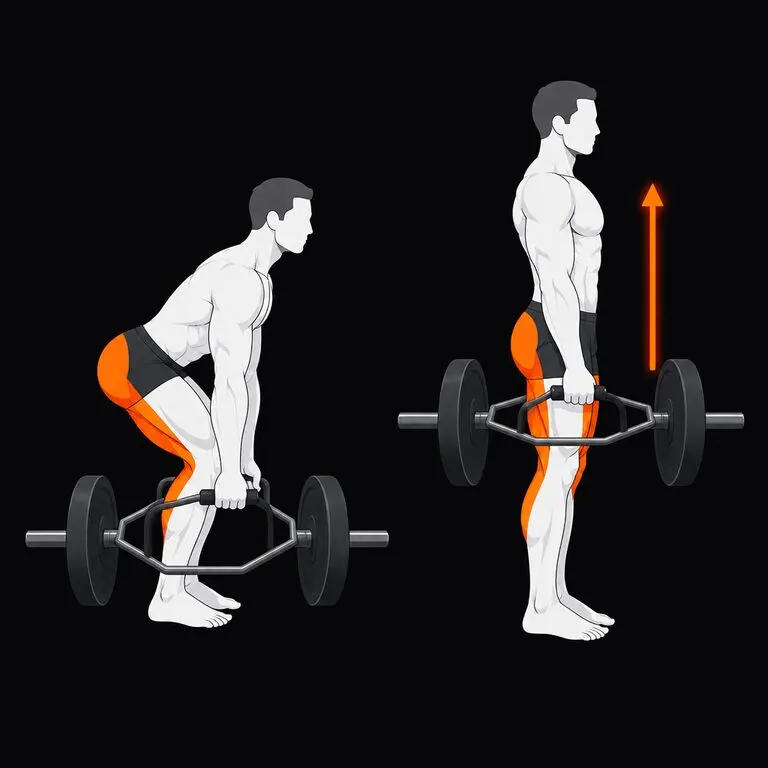
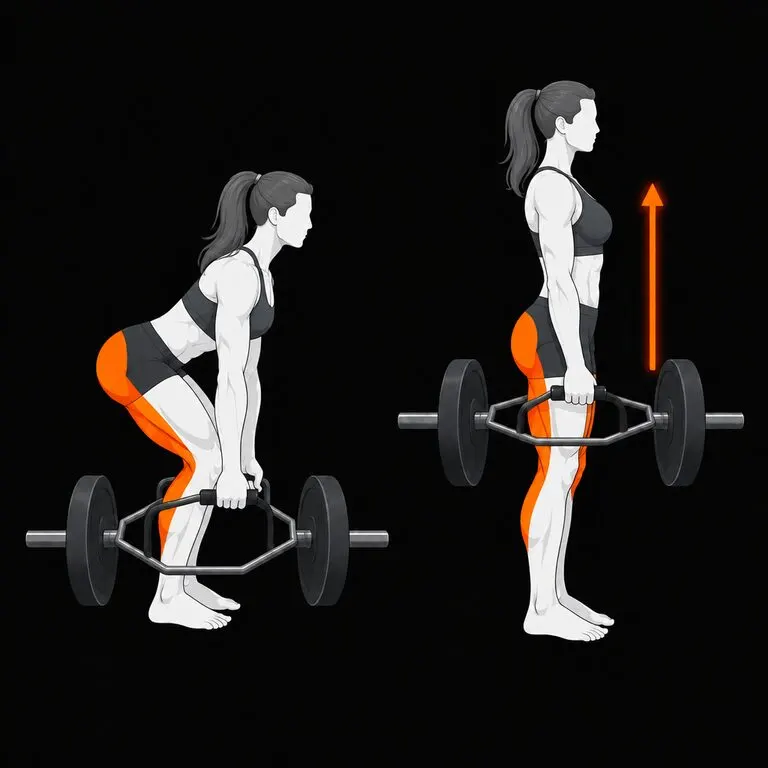
1. Trap-bar deadlift
- Same main muscle
- Same movement pattern
- Trap bar + Weight plates
You stand inside the bar and hold handles at your sides, so the load stays closer to your body and your torso stays more upright. Your knees bend more, so your quads do a bigger share of the work and your hamstrings do a little less.
To build muscle: 3 x 8-10 reps (from the app's rules).
How to do it
- Stand in the middle of the trap bar with your feet hip-width apart.
- Push your hips back, bend your knees and grip the handles with a flat back.
- Brace your core and stand up by pushing the floor away.
- Lower the bar under control by pushing your hips back first.
-
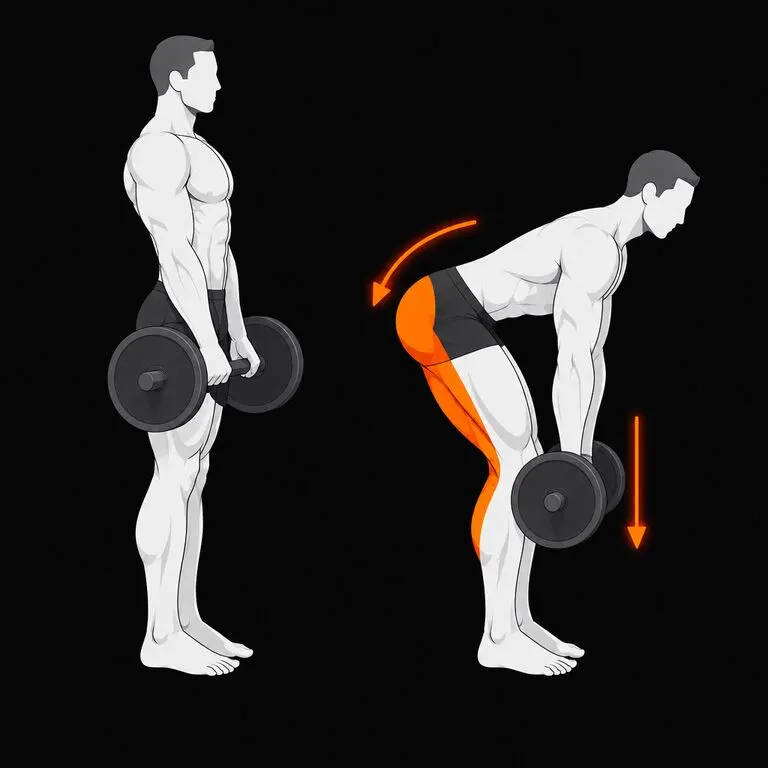
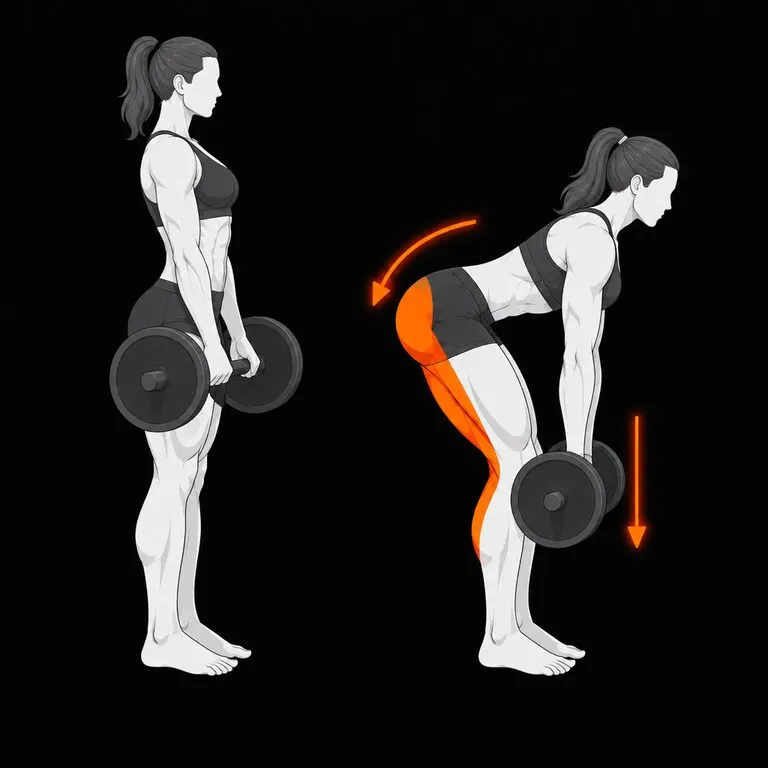
2. Barbell Romanian deadlift
- Same main muscle
- Same movement pattern
- Barbell + Weight plates
The RDL keeps the same bar and the same hinge, but it starts from the top and stops at about knee height. Your knees stay soft, so the hamstrings take more of the work and the quads take less than in a pull from the floor.
To build muscle: 3 x 8-12 reps (from the app's rules).
-
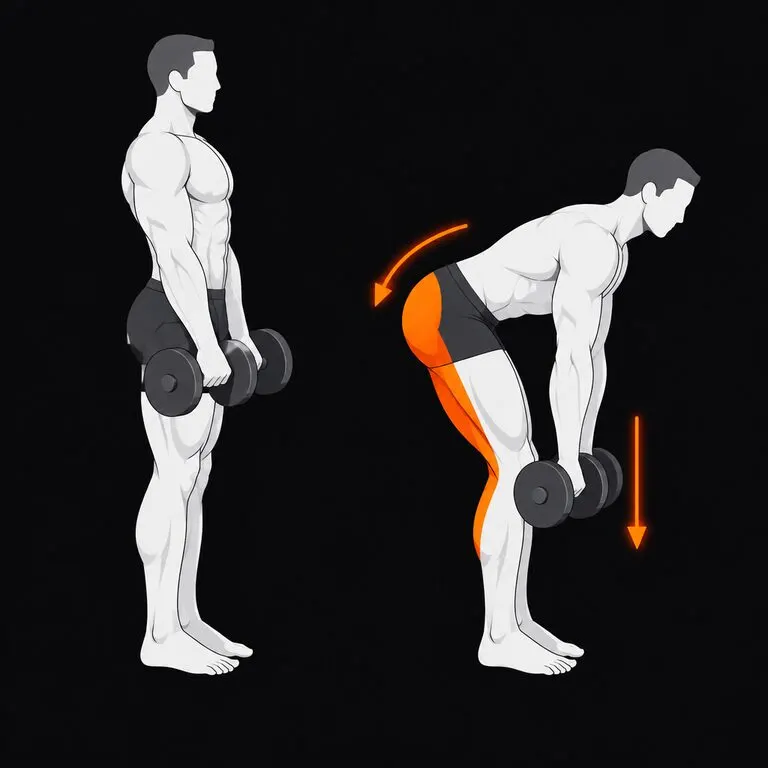
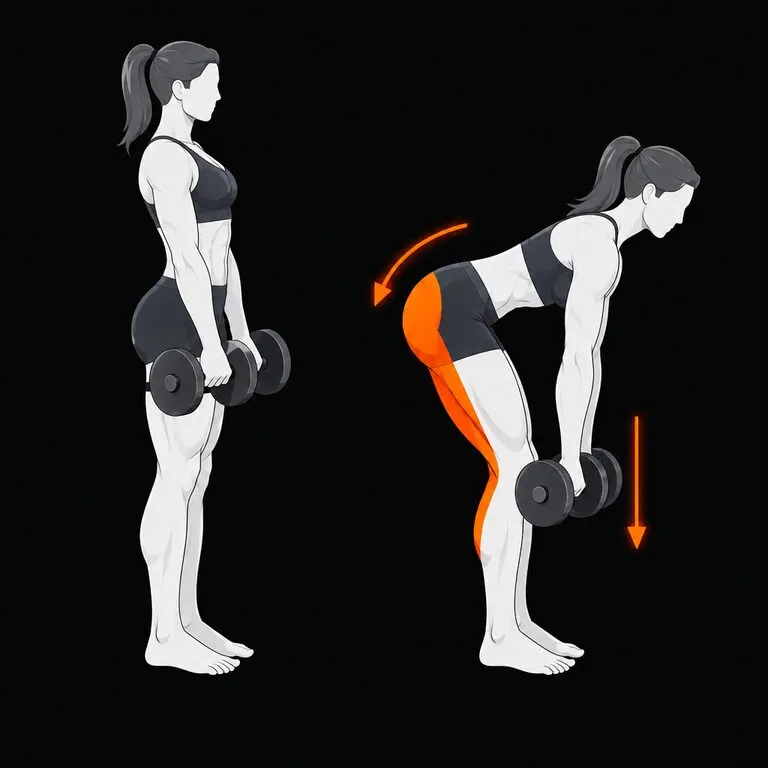
3. Dumbbell Romanian deadlift
- Same main muscle
- Same movement pattern
- Dumbbells
Two dumbbells let you train the deadlift hinge with no barbell and no plates. The load is lighter than a barbell pull, so use slower reps and a deep hamstring stretch to make each set hard.
To build muscle: 3 x 8-12 reps (from the app's rules).
-
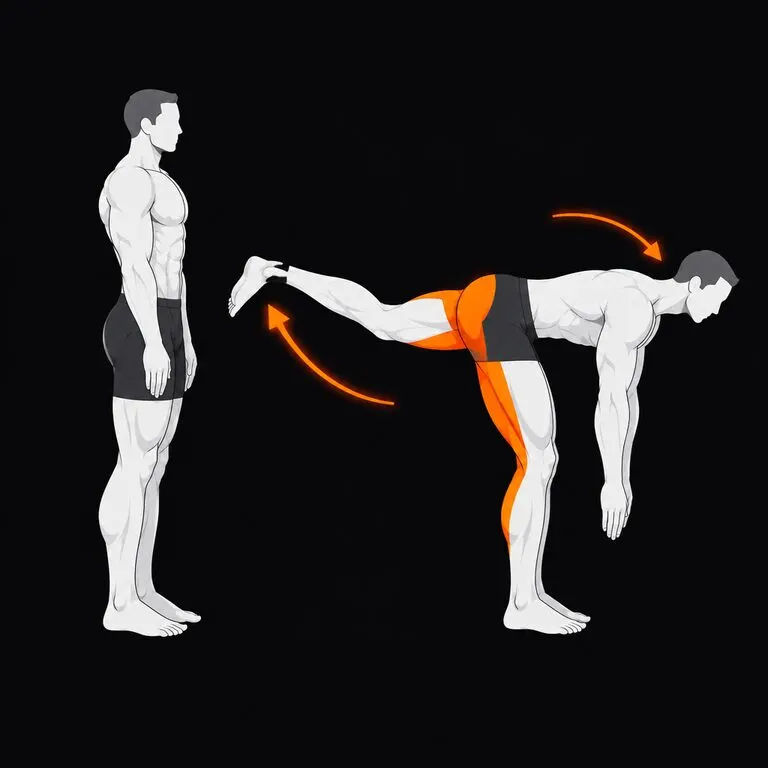
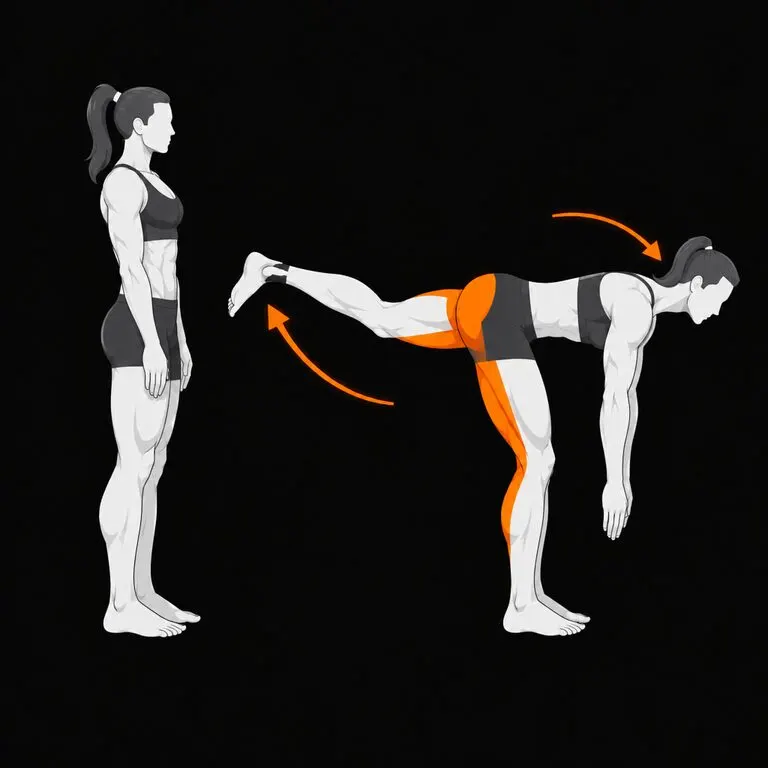
4. Single-leg Romanian deadlift
- Same main muscle
- Same movement pattern
- No equipment
You hinge on one leg, so each side works alone and a light load feels heavy. Balance becomes part of the lift, which makes it a good home choice but a poor test of maximal strength.
To build muscle: 3 x 8-20 reps (from the app's rules).
-
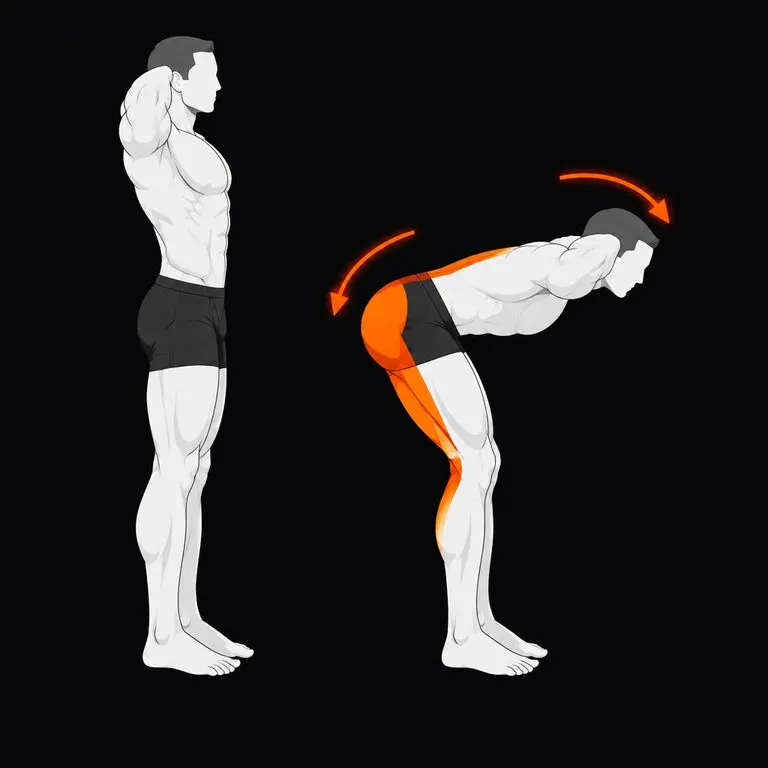
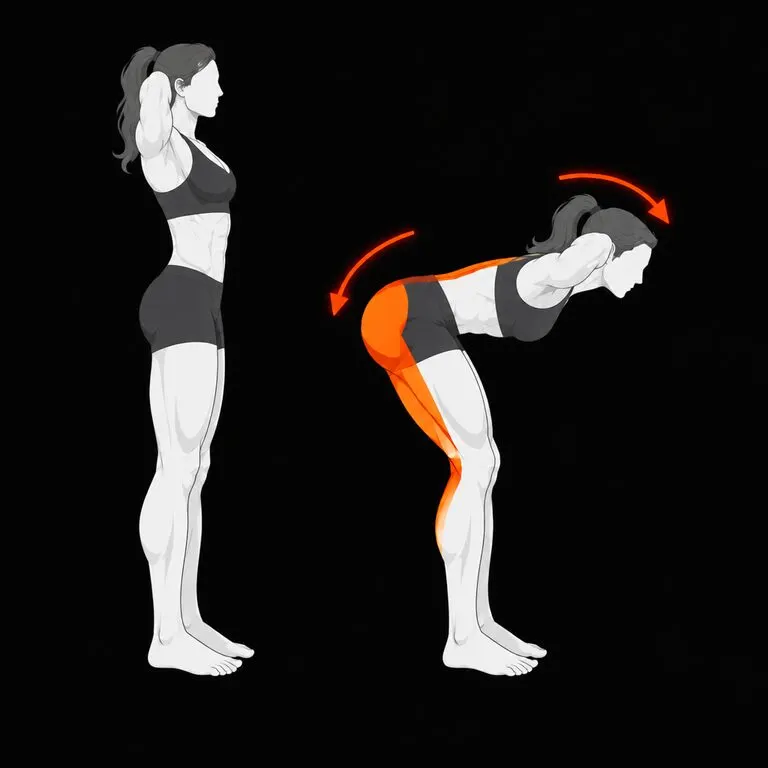
5. Bodyweight good morning
- Same main muscle
- Same movement pattern
- No equipment
The good morning teaches the same hips-back pattern with your hands behind your head and no weight. It is a beginner drill for the hinge, not a strength replacement, so move to a loaded version when it gets easy.
To build muscle: 3 x 8-12 reps (from the app's rules).
How to do it
- Stand tall with your hands behind your head.
- Soften your knees and push your hips back.
- Keep your back flat as your torso tips forward.
- Squeeze your glutes to return to standing.
-
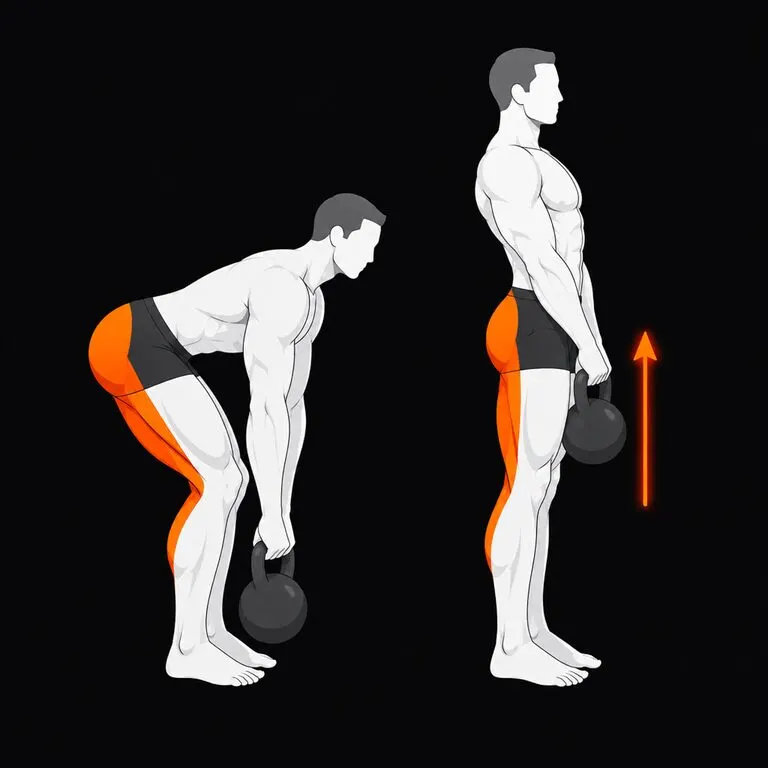
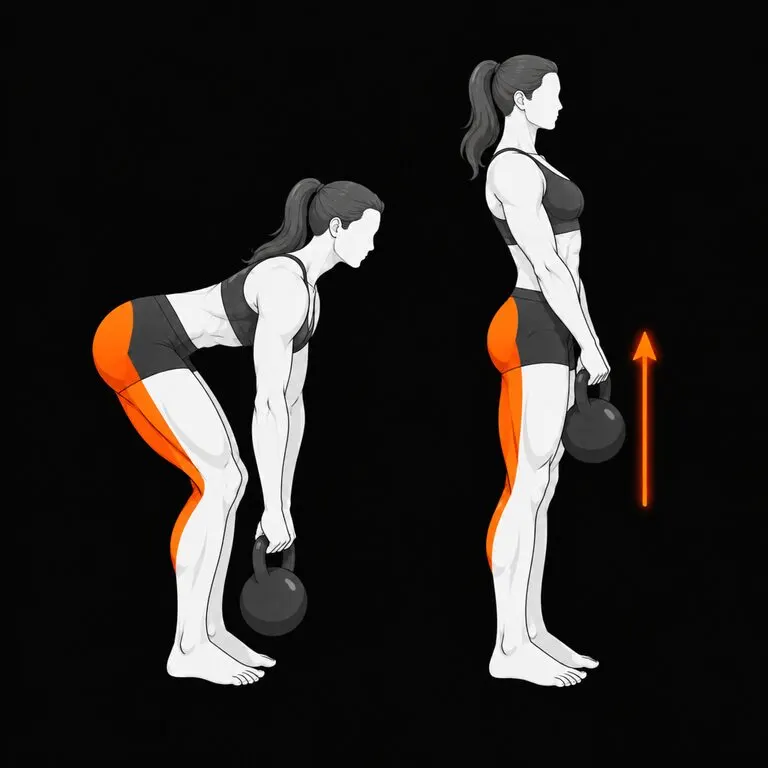
6. Kettlebell deadlift
- Trains the hamstrings
- Same movement pattern
- Kettlebell
A kettlebell between your feet gives you a short, simple pull from the floor with the same flat-back hinge. Most kettlebells are much lighter than a loaded barbell, so it suits beginners and home training best.
To build muscle: 3 x 8-12 reps (from the app's rules).
How to do it
- Stand with the kettlebell on the floor between your feet.
- Push your hips back and grip the handle with both hands, back flat.
- Stand up by driving your hips forward, keeping your arms long.
- Push your hips back to lower the kettlebell to the floor under control.
-
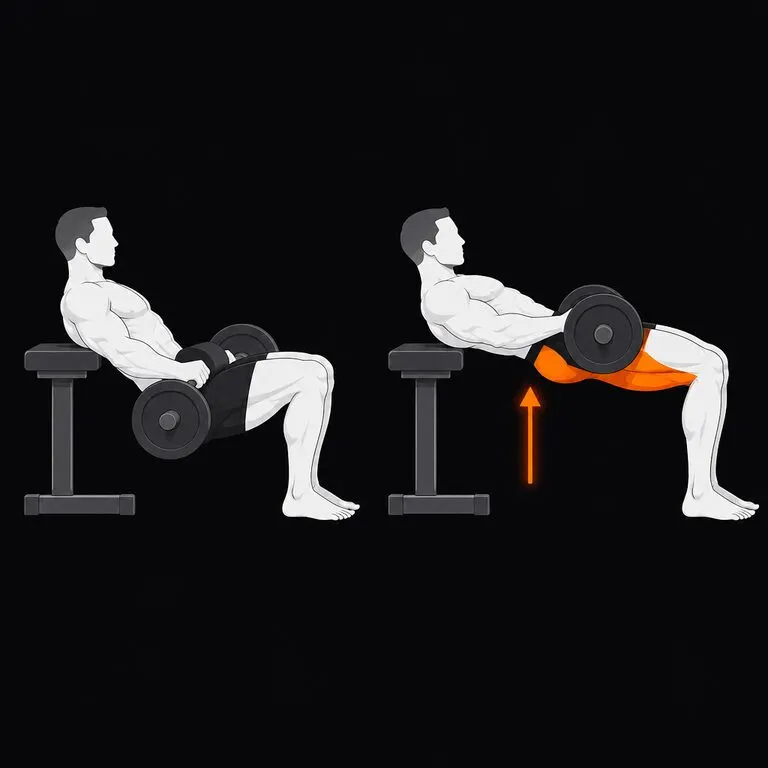
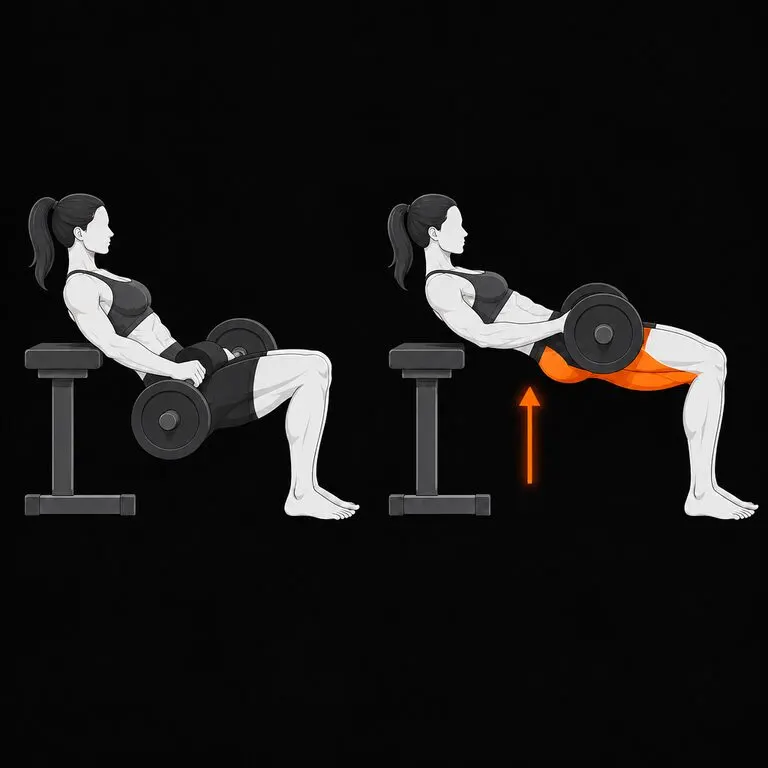
7. Barbell hip thrust
- Trains the hamstrings
- Same movement pattern
- Barbell + Weight plates + Flat bench
The hip thrust keeps hip extension for the glutes, but your upper back rests on a bench and the bar sits on your hips. Your lower back holds the bar much less than in a deadlift, though your hamstrings also work less.
To build muscle: 3 x 8-12 reps (from the app's rules).
-
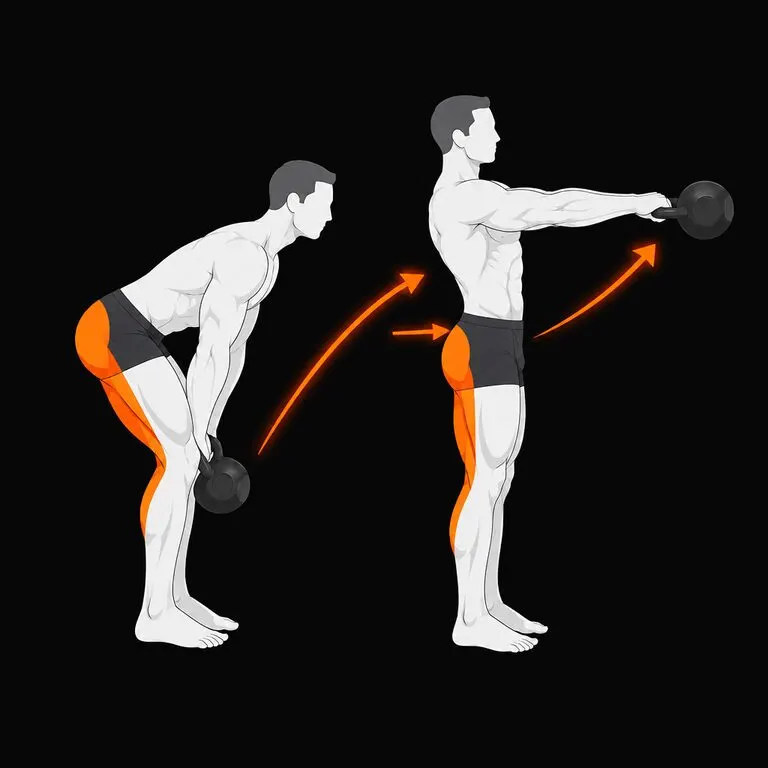
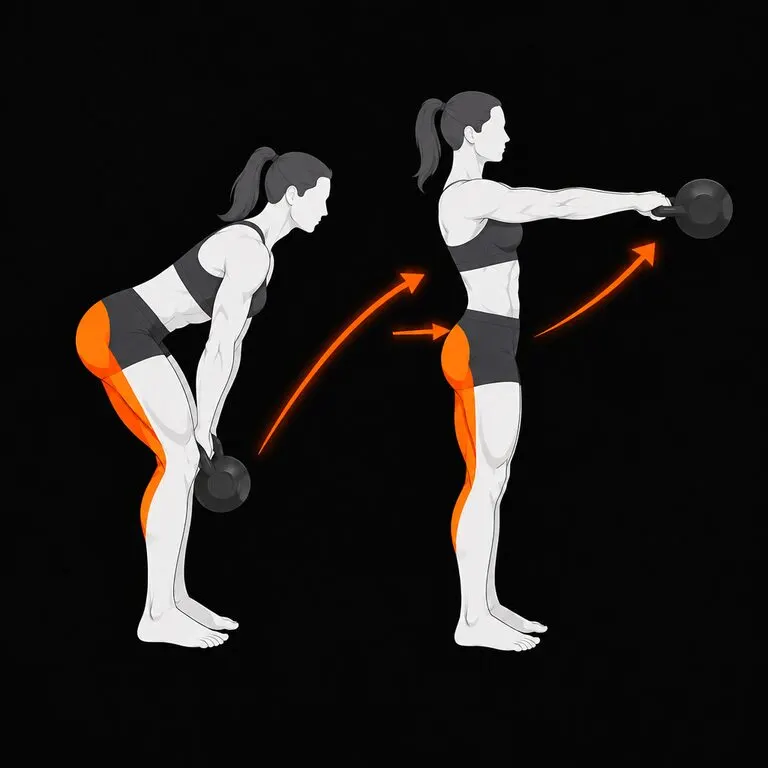
8. Kettlebell swing
- Trains the hamstrings
- Same movement pattern
- Kettlebell
The swing is a fast, explosive hinge: your hips snap forward and the bell floats up to chest height. It trains power and conditioning with a light bell, so it adds speed but does not replace heavy pulls.
To build muscle: 3 x 8-12 reps (from the app's rules).
-
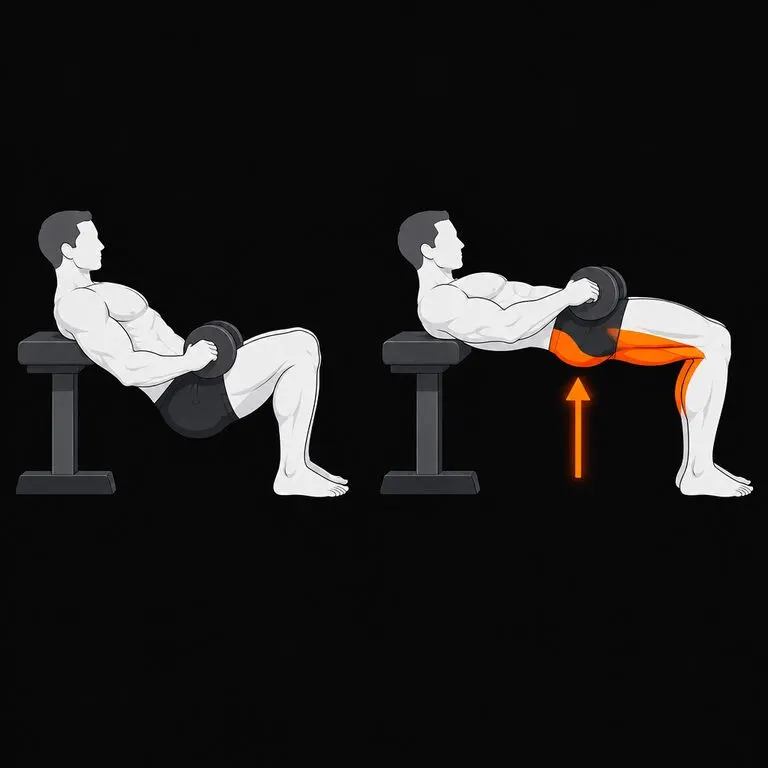
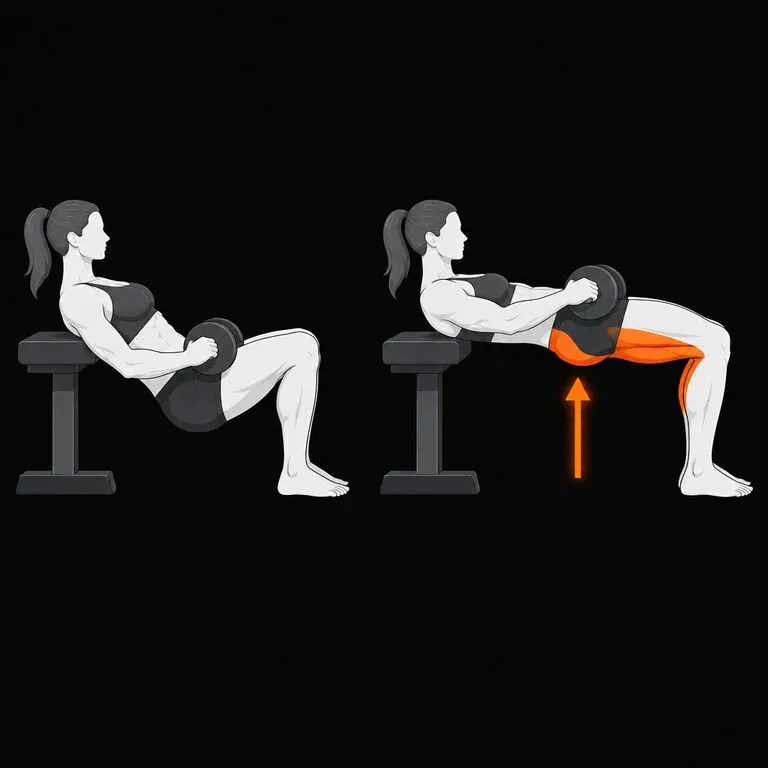
9. Dumbbell hip thrust
- Trains the hamstrings
- Same movement pattern
- Dumbbells + Flat bench
A dumbbell on your hips turns the deadlift lockout into a glute exercise with your back supported on a bench. Use it when you have dumbbells and a bench but want less load through your lower back.
To build muscle: 3 x 8-12 reps (from the app's rules).
How to do it
- Rest your upper back on the bench edge with the dumbbell on your hips.
- Plant your feet so your shins are vertical at the top.
- Drive your hips up until your body is flat from knees to shoulders.
- Tuck your chin and pause one second at the top.
-
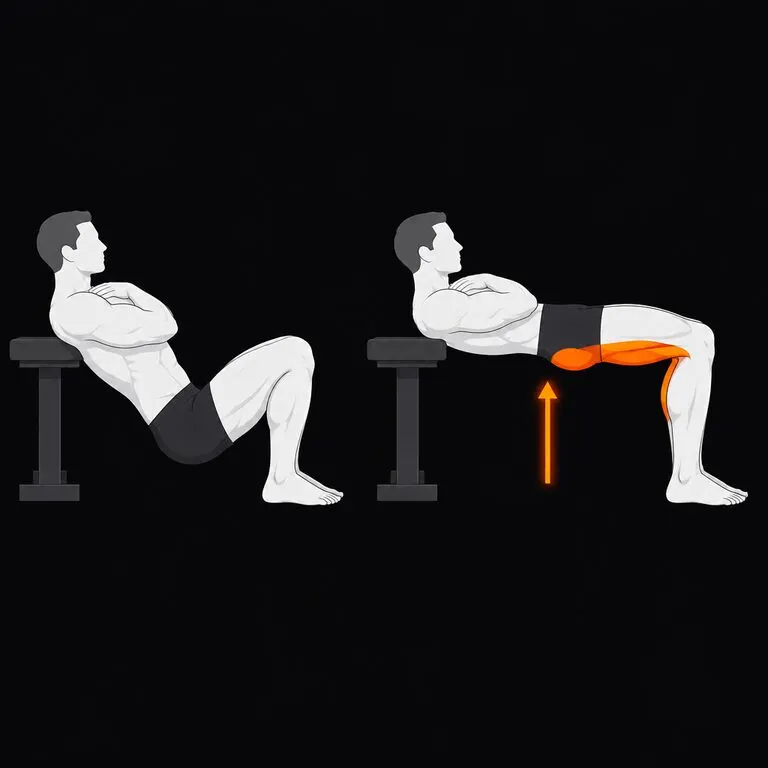
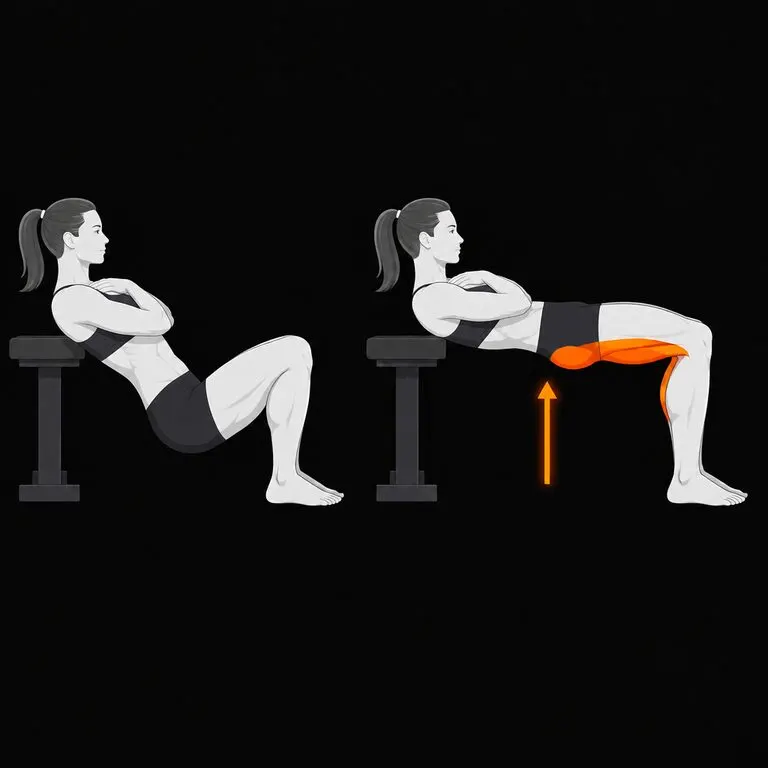
10. Bodyweight hip thrust
- Trains the hamstrings
- Same movement pattern
- No equipment
With your upper back on a sofa or bench and no weight, you train the end of the hip hinge at home. It is much easier than a deadlift, so use pauses at the top or one-leg reps to keep it hard.
To build muscle: 3 x 8-20 reps (from the app's rules).
How to do it
- Rest your upper back on the edge of a sturdy sofa or bench.
- Plant your feet so your shins are vertical at the top.
- Drive your hips up until your body is flat from knees to shoulders.
- Keep your ribs down and squeeze your glutes for two seconds.


Comparison table
| Exercise | Main muscles | Equipment | Level | Same pattern |
|---|---|---|---|---|
| Deadlift (Barbell) (this exercise) | hamstrings, glutes and lower back | Barbell, Weight plates | Intermediate | - |
| Trap-bar deadlift | hamstrings, glutes and quads | Trap bar, Weight plates | Beginner | Yes |
| Barbell Romanian deadlift | hamstrings and glutes | Barbell, Weight plates | Intermediate | Yes |
| Dumbbell Romanian deadlift | hamstrings and glutes | Dumbbells | Beginner | Yes |
| Single-leg Romanian deadlift | hamstrings and glutes | None | Intermediate | Yes |
| Bodyweight good morning | hamstrings, glutes and lower back | None | Beginner | Yes |
| Kettlebell deadlift | glutes and hamstrings | Kettlebell | Beginner | Yes |
| Barbell hip thrust | glutes and hamstrings | Barbell, Weight plates, Flat bench | Beginner | Yes |
| Kettlebell swing | glutes and hamstrings | Kettlebell | Intermediate | Yes |
| Dumbbell hip thrust | glutes and hamstrings | Dumbbells, Flat bench | Beginner | Yes |
| Bodyweight hip thrust | glutes and hamstrings | None | Beginner | Yes |
How we chose
Keep the hip hinge. A good deadlift substitute still asks you to push your hips back with a flat back and then drive them forward to stand tall. Look for a lift that loads the back of your legs, not only the quads. If you lose the heavy bar, add reps, slow the lowering phase or work one leg at a time. If the lower back is the problem, pick a version with a more upright torso, such as the trap bar, or a hip thrust, where your back rests on a bench.
The ranking is the same rule as the swap list in the Oh My Coach app: exercises with the same first main muscle and the same movement pattern come first, then the rest of the pattern, ordered by how well each one works as a main exercise. An exercise never replaces itself. The extra picks for home, dumbbells and bands come from the same rule with only that equipment.
Questions
What is the best deadlift alternative at home?
With dumbbells, do the dumbbell Romanian deadlift. With no equipment, use the single-leg RDL and hip thrusts on a sofa. Both keep the hinge, and the one-leg version makes a light load hard enough.
Can I replace deadlifts with trap bar deadlifts?
Yes. In an EMG study, the barbell deadlift gave higher hamstring activity than the hex bar deadlift, and the hip thrust gave the highest glute activity. The trap bar is still a full-body pull, and many lifters find the upright torso easier on the lower back.
Can I replace deadlifts with Romanian deadlifts?
Yes, if your goal is the hamstrings and glutes. In one study, the conventional deadlift gave higher quad and glute activity than the RDL at the same load. Keep both if you want to get better at pulling from the floor.
What can I do instead of deadlifts if my lower back hurts?
Stop the deadlift and try a hinge that loads the back less, such as the hip thrust or a light cable pull-through. If the pain stays, see a health professional before you add load again.